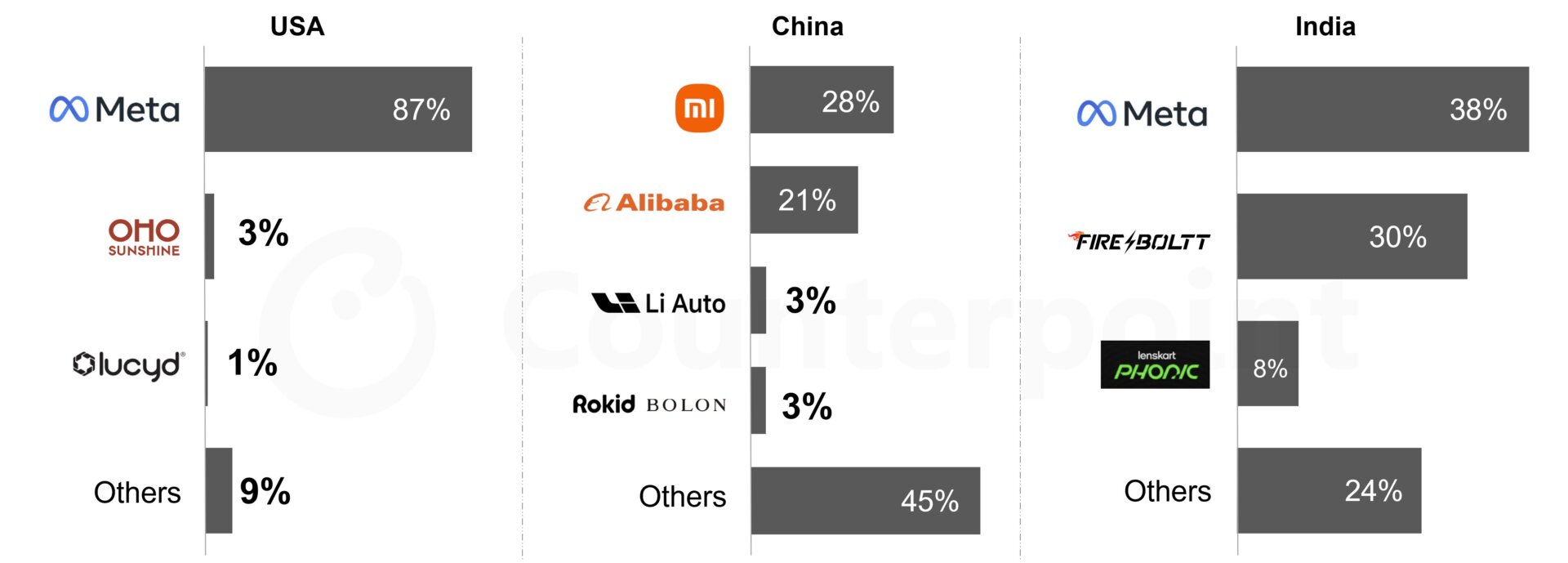
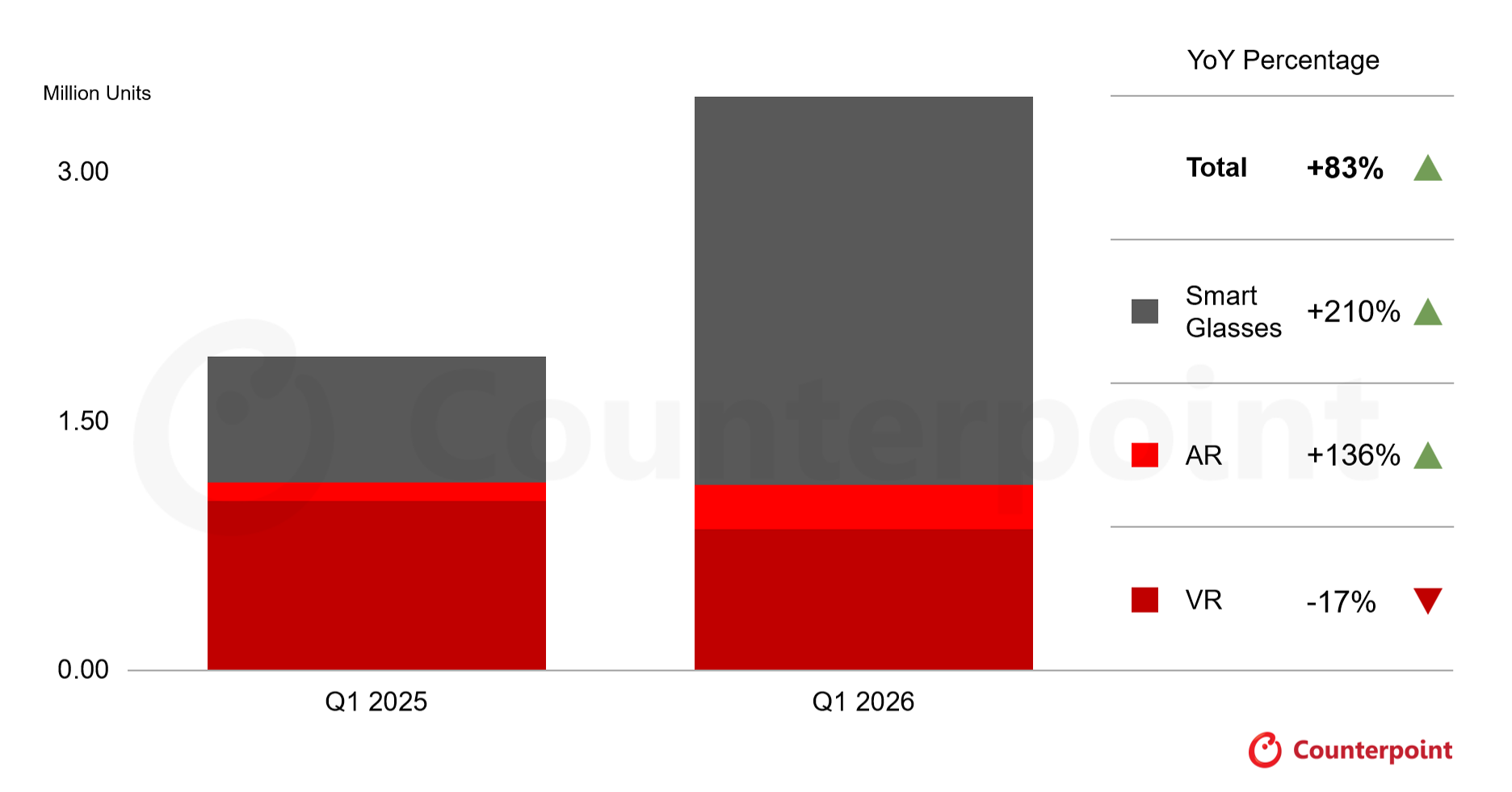
Xiaomi is quickly becoming one of the most important names in the smart glasses market. According to Counterpoint Research’s Q1 2026 data, global smart glasses shipments grew 83% year-on-year, driven by strong demand for AR glasses and displayless AI smart glasses. In China, Xiaomi, including Mijia, ranked first with 28% market share, ahead of Alibaba at 21% and Li Auto at 3%. This shows that Xiaomi’s ecosystem strategy is now expanding beyond phones, wearables, EVs, and smart home products.
AR and AI Glasses Are Growing Fast
Counterpoint’s data covers three main categories: VR glasses, AR glasses, and displayless smart glasses. The overall market grew strongly, but not every category moved in the same direction.
VR glasses dropped 17% year-on-year, showing weaker demand for traditional immersive headsets. Meanwhile, AR glasses grew 136%, while displayless smart glasses jumped 210%. This suggests that users are moving toward lighter, more practical wearable products that can support AI, voice control, camera features, translation, notifications, and ecosystem services.
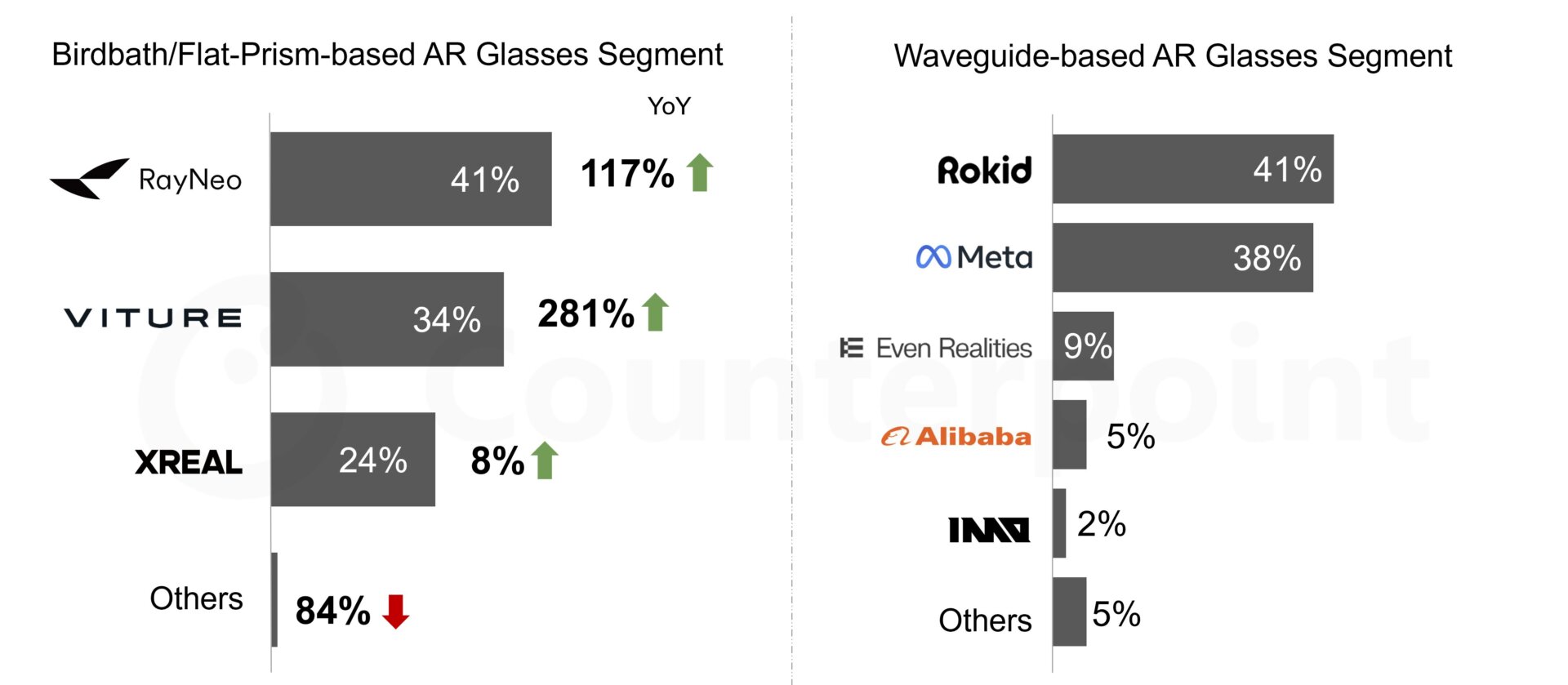
The AR glasses segment is also changing technically. Birdbath and flat-prism designs still lead the market, but their share fell from 82% to 58%. Waveguide-based AR glasses rose from 18% to 42%, proving that more brands are investing in thinner, more advanced optical systems.
Affected Devices / Market Segments
China smart glasses market share in Q1 2026:
- Xiaomi / Mijia: 28%
- Alibaba: 21%
- Li Auto: 3%
- Rokid: 3%
- Others: 45%
Global segment growth:
- Total smart glasses: +83% YoY
- Displayless smart glasses: +210% YoY
- AR glasses: +136% YoY
- VR glasses: -17% YoY
Xiaomi Finds a New Ecosystem Battlefield
Xiaomi’s 28% share in China is important because smart glasses are becoming a new ecosystem device category. For Xiaomi, this is not only about selling another wearable. Smart glasses can connect with Xiaomi HyperOS, smartphones, tablets, smart home devices, AI services, and future automotive experiences.
This is also where Xiaomi has a clear advantage. The company already has one of the strongest connected-device ecosystems in China. If smart glasses become a daily AI assistant device, Xiaomi can use its hardware scale, Mijia brand power, and HyperConnect experience to compete with both internet companies and automotive brands.
The wider industry is moving in the same direction. CounterPoint also notes that Chinese vendors such as Xiaomi are rising fast in AI glasses, while the entry of smartphone and automotive manufacturers reflects a broader shift toward ecosystem-based smart glasses competition.