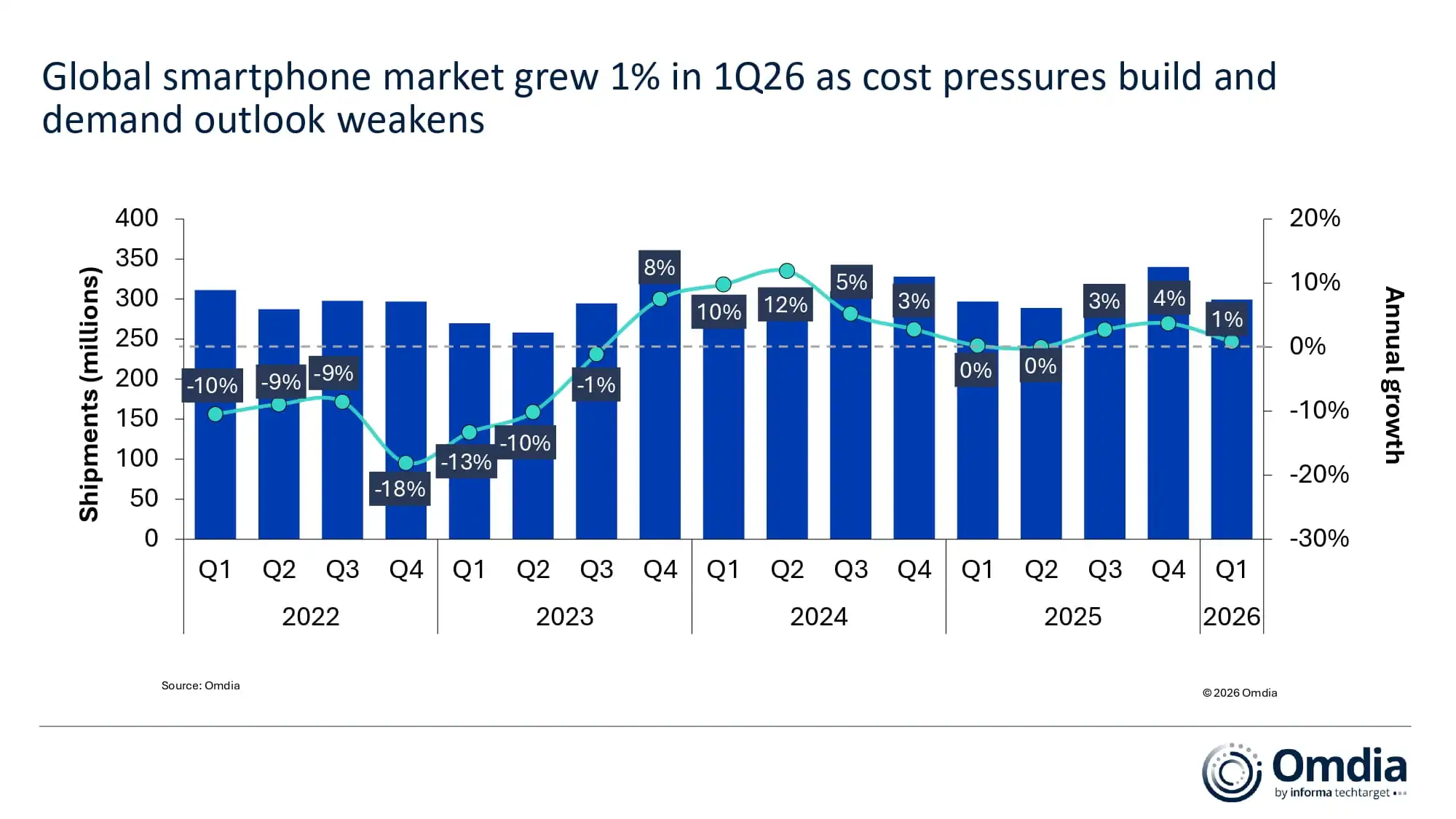
The global smartphone market experienced a modest 1% year-on-year growth in the first quarter of 2026, driven largely by temporary support from front-loaded channel inventory. According to the latest Preliminary Smartphone Market Pulse from market research firm Omdia, Xiaomi has successfully maintained a strong position, securing the third spot globally. However, beneath this stable surface, severe supply chain cost pressures are building, threatening the pricing strategies of all major Android manufacturers.
DRAM and NAND Prices Surge
A critical factor shaping the 2026 smartphone landscape is the skyrocketing cost of essential internal components. The Omdia report highlights that mobile DRAM and NAND memory prices surged by approximately 90% quarter-on-quarter in Q1 2026 alone.
Furthermore, industry forecasts predict an additional 30% price increase heading into Q2. These soaring bill of materials (BOM) costs, coupled with early signs of global logistics and trade flow disruptions, are adding significant friction to the global supply chain and forcing OEMs to rethink their hardware strategies.
Q1 2026 Global Market Standings
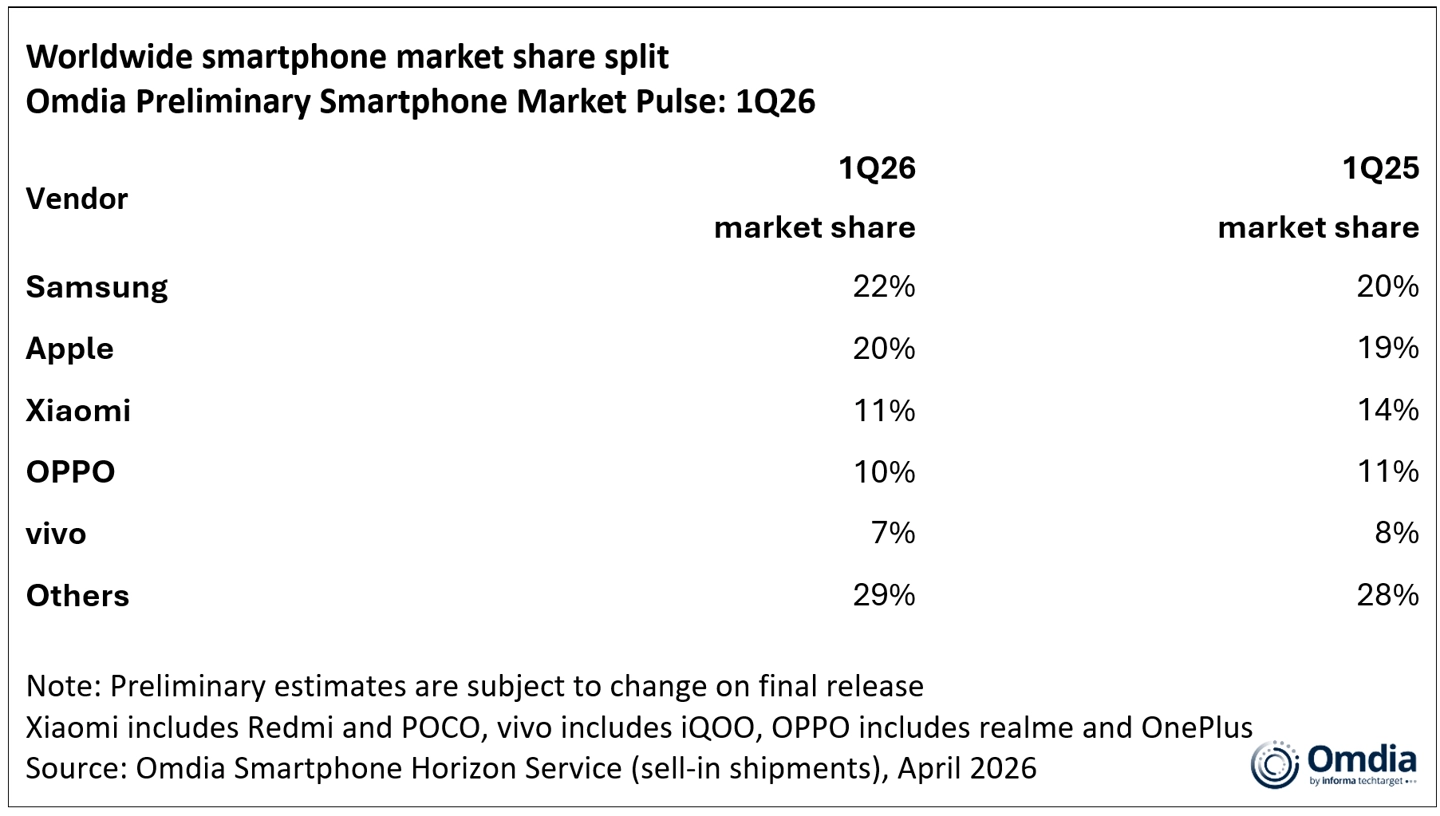
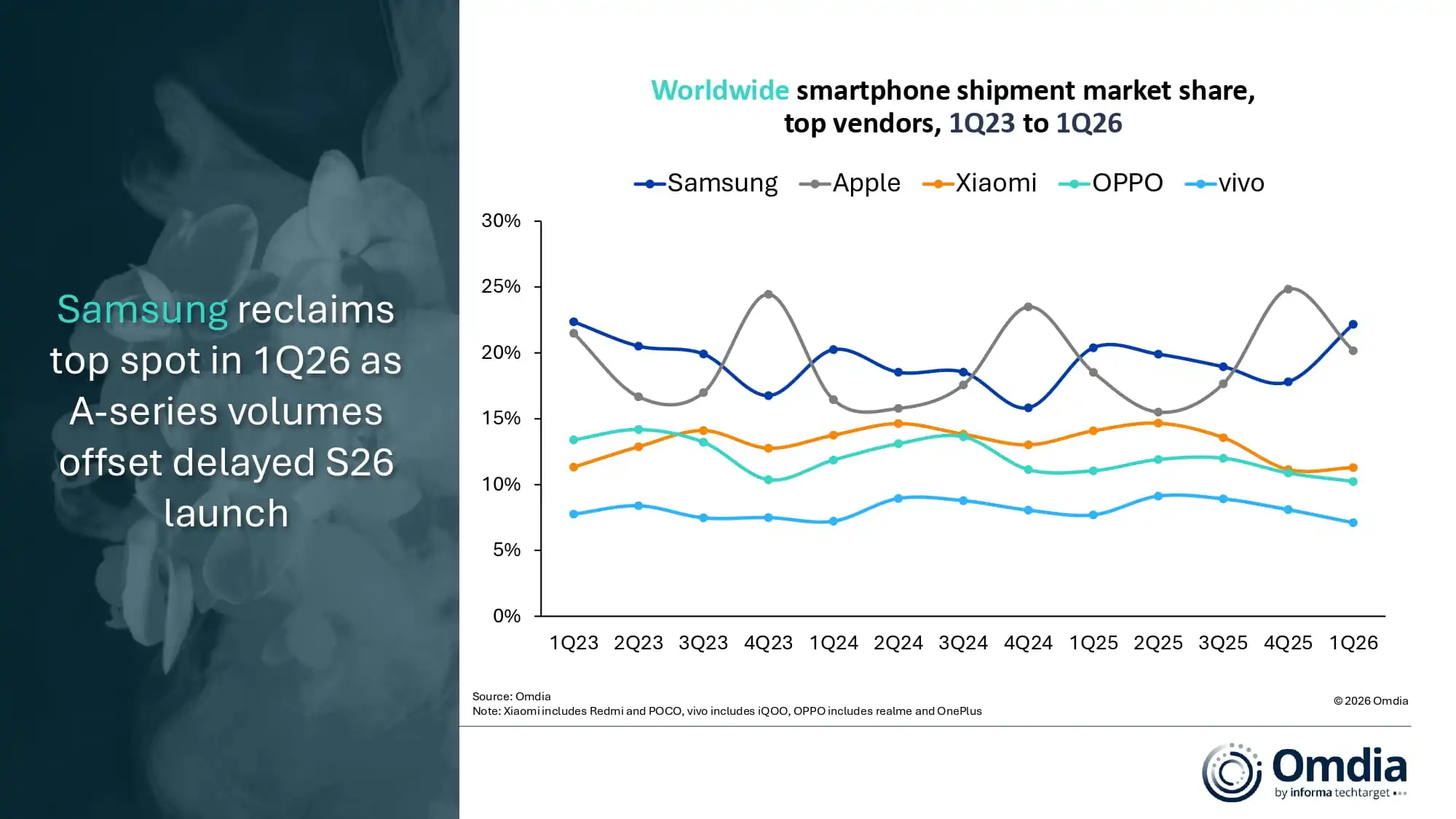
Despite the brewing financial headwinds, the premium and upper-mid-range markets remained resilient in the first quarter. Here is how the top vendors split the worldwide shipment market share in Q1 2026:
-
Samsung: 22% (Reclaimed the top spot, bolstered by resilient flagship demand and a 10%+ increase in Galaxy S26 series pre-orders compared to its predecessor).
-
Apple: 20% (Maintained strong momentum thanks to a stable pricing strategy and robust demand for the iPhone 17 series).
-
Xiaomi: 11% (Holding steady as the leading Chinese manufacturer globally).
-
OPPO: 10%
-
vivo: 7%
-
Others: 29%
Pricing Strategies and The Android Dilemma
The current financial climate poses a dual challenge for Android manufacturers regarding sales volume and profit margins. To combat these pressures, brands are responding by streamlining their product portfolios, selectively releasing new devices, and adopting highly prudent pricing strategies.
Omdia’s chief analyst, Sanyam Chaurasia, points out that while rising costs force manufacturers to raise retail prices, the impact is unevenly distributed. Brands focusing heavily on entry-level and mid-range markets—such as Transsion—face immense risks due to their thin profit margins and limited pricing power. Looking ahead, analysts warn that the worst may be yet to come; rising retail prices could soon trigger a demand shock, causing consumers to postpone their hardware upgrades entirely.