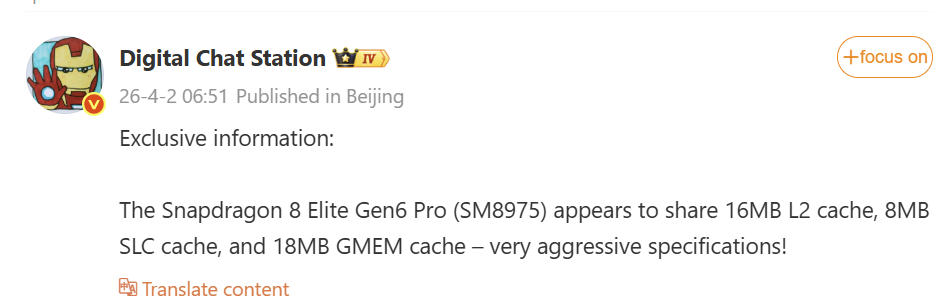
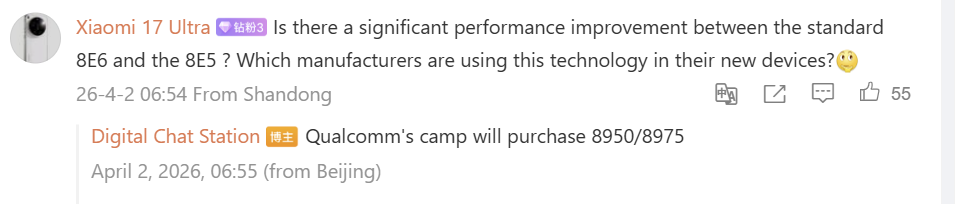
Welcome back, Xiaomi enthusiasts. The mobile tech landscape is heating up ahead of September 2026. Reports from reliable tipster @DigitalChatStation have unveiled the aggressive specifications of Qualcomm’s next-generation flagship processor: the Snapdragon 8 Elite Gen6 Pro (SM8975). True to form, Xiaomi is poised to be the absolute first manufacturer to integrate this powerhouse, launching it alongside the highly anticipated Xiaomi 18 series. Furthermore, this silicon beast will be the heart of the upcoming REDMI K90 Pro Max in the domestic market. For our international readers, note that this device will be launched globally under the POCO brand as the POCO F9 Ultra.
A Leap in Silicon Architecture
Let’s dive into the technical details. The Snapdragon 8 Elite Gen6 Pro is shaping up to be an architectural monster. Leaked customs manifests and insider reports confirm a massive shared 16MB L2 cache, 8MB of SLC (System Level Cache), and an impressive 18MB of GMEM (Graphics Memory). Paired with an upgraded Adreno 850 GPU, this setup is designed to crush heavy workloads and extreme gaming sessions.
The CPU utilizes an unconventional 2+3+3 cluster architecture—featuring two super cores, three performance cores, and three efficiency cores. To feed this demanding processor, the SM8975 supports next-generation LPDDR6 memory up to 16GB, effectively shattering current memory bandwidth bottlenecks.
Xiaomi Snapdragon 8 Gen 6 Devices
-
Xiaomi 18 Series: Expected Launch September 2026
-
REDMI K90 Pro Max (China Exclusive) / POCO F9 Ultra (Global Market): Expected Launch October 2026
System Improvements and Market Impact
Hardware is only half the story. These new flagships will boot up with Xiaomi HyperOS 4. Engineered from the ground up to be a highly efficient Android skin, HyperOS 4 will directly leverage the massive L2 cache and the optimized 2+3+3 architecture of the new Snapdragon chip. This synergy is expected to deliver unprecedented battery life and superior thermal management. The aggressive cache system will allow HyperOS 4’s background task handlers to keep your most-used applications resting in memory without draining the battery, ensuring the user interface remains instantaneously responsive under heavy loads.