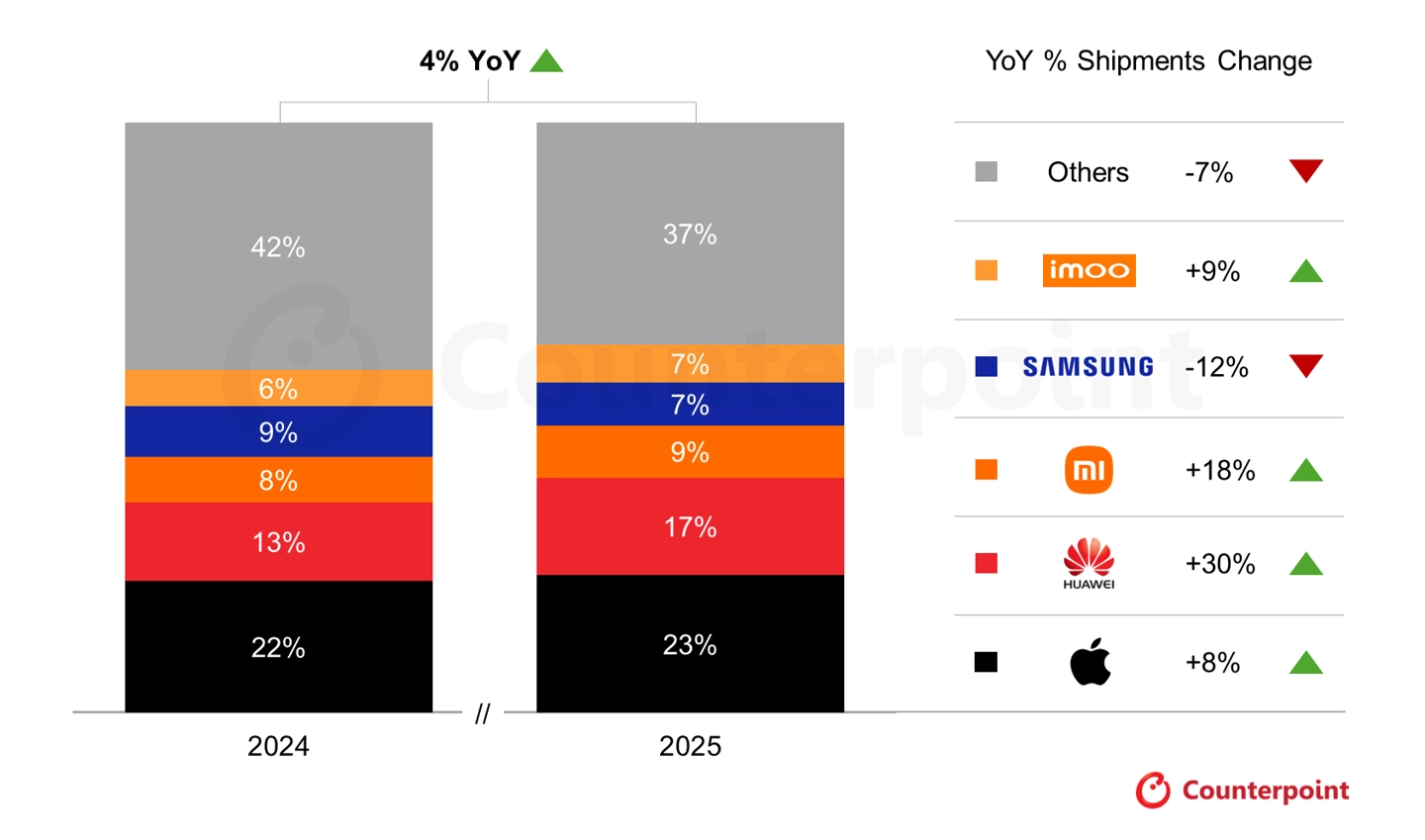
Samsung is preparing a major strategy shift for its Galaxy Watch lineup as competition from Chinese brands continues to intensify. New industry reports reveal that Samsung is now focusing heavily on AI-powered health tracking features and a stronger wearable ecosystem to recover market share lost to brands like Huawei and Xiaomi. According to new Counterpoint Research data, Samsung’s smartwatch market share dropped to just 7% in 2025, while Huawei and Xiaomi recorded significant growth.
Xiaomi and Huawei continue aggressive smartwatch growth
The latest Counterpoint Research report shows a major shift in the global smartwatch market. Apple still leads with a 23% market share in 2025, but Huawei climbed to 17%, while Xiaomi reached 9%. Samsung now sits in fourth place with 7%, a notable decline from its second-place position and 10% market share back in 2022.
Huawei’s rapid expansion in China and Xiaomi’s aggressive pricing strategy are putting serious pressure on Samsung’s wearable business. Xiaomi in particular continues expanding its ecosystem through affordable smartwatches and deeper Xiaomi HyperConnect integration with Xiaomi phones, tablets, and smart home products.
Samsung bets on AI health tracking
According to the report, Samsung’s new strategy centers around two major areas:
- Advanced AI-powered health monitoring
- A tightly integrated Galaxy ecosystem
Samsung Health already reportedly has 77 million monthly active users and 46 million weekly active users. Fitness tracking usage also increased nearly 50% compared to 2025, with running analytics becoming one of the platform’s most popular features.
To strengthen this ecosystem, Samsung is preparing a new AI-based running coach feature expected to launch later in 2025. The system will reportedly perform a 12-minute running analysis test, classify users between levels 1 and 10, and generate personalized training programs.
Galaxy Watch health features are becoming more medical-focused
Samsung is also expanding its health ecosystem around four major categories:
- Sleep tracking
- Exercise monitoring
- Diet management
- Mental health analysis
The company is reportedly improving advanced medical-grade features including:
- Electrocardiogram (ECG)
- Irregular heart rhythm notifications
- Heart rate variability analysis
- Early vasovagal syncope (VVS) detection
Samsung claims that the Galaxy Watch 6’s PPG sensor combined with AI algorithms can analyze heart rate variability in real time and potentially warn users about vasovagal syncope risks before symptoms appear.
Xiaomi’s ecosystem strategy may remain Samsung’s biggest challenge
While Samsung is investing heavily into AI and health technologies, Xiaomi continues growing rapidly thanks to ecosystem integration and competitive pricing. Xiaomi’s wearable products are increasingly connected through Xiaomi HyperOS and Xiaomi HyperConnect, creating a seamless experience between smartphones, tablets, smart bands, earbuds, and smart home devices.
Samsung’s renewed focus on AI health features shows the company is trying to differentiate Galaxy Watch products beyond hardware specifications alone. However, Huawei’s strong recovery and Xiaomi’s fast global expansion suggest the smartwatch market could become even more competitive throughout 2025.