


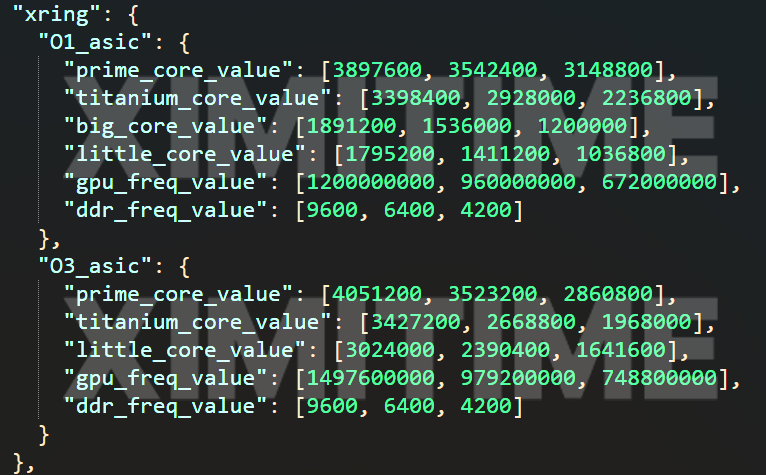
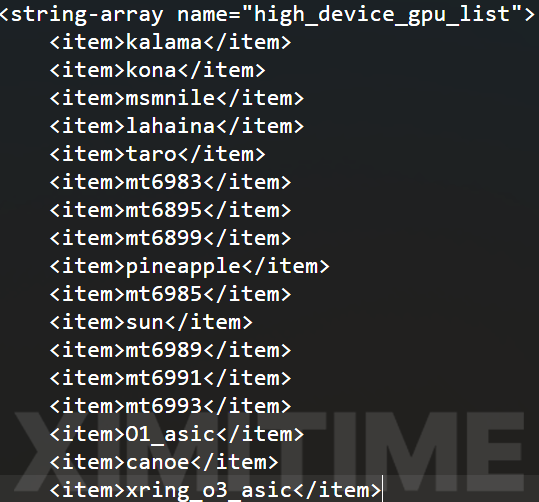
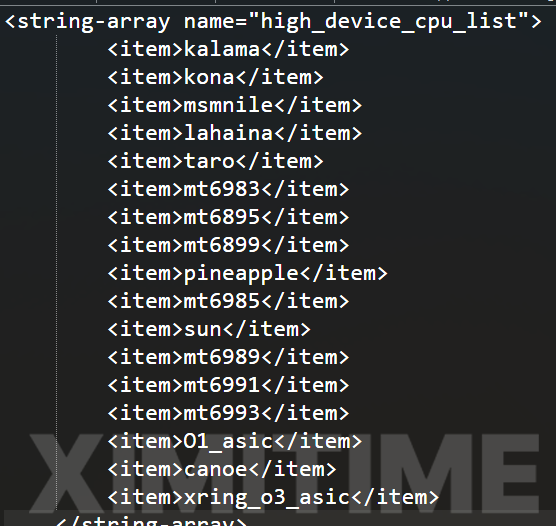
Today, on April 28, our team brings you an exclusive leak straight from the depths of the Mi Code database. The highly anticipated XRING O3 processor, destined to power the upcoming Xiaomi MIX Fold 5 (internally known as Q18 or codename “lhasa“), has had its core clock speeds exposed. It will launch exclusively in the Chinese market, this proprietary chipset reveals a radical architectural shift that proves Xiaomi is not just competing with external vendors—they are actively rewriting the rules of mobile processing.
The Architecture Shift and Frequency Leaps
Our latest code teardown reveals that the XRING O3 is not just an iterative update over the XRING O1 used in last year’s Xiaomi 15S Pro; it is a complete structural redesign.
-
The 4 GHz Barrier is Broken (Prime Core): The XRING O1 featured a Prime core running at 3.89 GHz (3897600). The new XRING O3 pushes the envelope, blasting past the 4 GHz mark to hit a blistering 4.05 GHz (4051200).
-
A Radical Architecture Change – Where is the “Big Core”?: The most shocking discovery in the Mi Code is the elimination of the traditional “Big Core” cluster. While the O1 utilized a 4-cluster setup (Prime + Titanium + Big + Little), the O3 completely removes the “Big” tier, settling on a streamlined Prime + Titanium + Little architecture.
-
The “Little” Core is No Longer Little: By removing the Big cluster, Xiaomi dramatically buffed the efficiency cores. The O3’s “Little” core is clocked at an astonishing 3.02 GHz. To put this in perspective, the O1’s little core was 1.79 GHz, and its big core was 1.89 GHz. This means the XRING O3’s weakest core is now nearly 60% faster than the previous generation’s mid-tier cores.
-
A 25% Jump in GPU Power: Mobile gamers and power users will be thrilled to see the graphics processing unit (GPU) jump from 1.2 GHz on the O1 to nearly 1.5 GHz (1497600000) on the O3. This translates to vastly superior rendering capabilities and stable frame rates in heavy workloads.
-
DRAM Remains Unchanged: The memory frequency remains locked at 9600 MT/s for both generations, maintaining top-tier memory bandwidth without altering the power draw.
The frequency leak from the Mi Code revealed the architectural clusters, but it didn’t explicitly spell out the exact total core count or distribution. We know it shifted to a 3-cluster setup by completely dropping the “Big” cores:
-
Prime Core (4.05 GHz)
-
Titanium Core (3.42 GHz)
-
Little Core (3.02 GHz)
If Xiaomi follows the standard 8-core (Octa-core) industry standard, this architecture might be arranged in a 1 + 3 + 4 or 1 + 2 + 5 configuration. However, since they are completely rewriting the rules and pushing the “Little” cores past 3 GHz, they might be experimenting with a completely non-traditional core count. We expect this new SoC will use the new ARM C1 series.
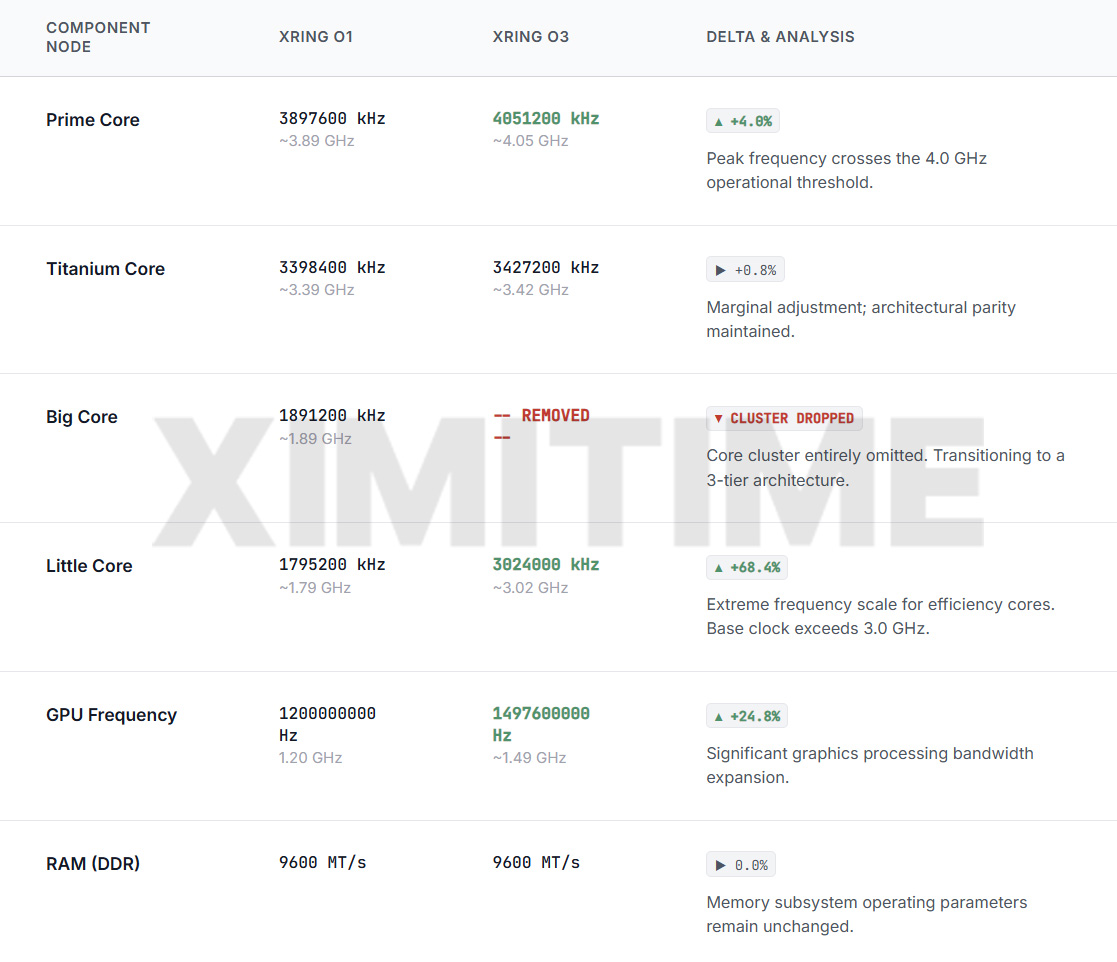
XRING O1 vs. XRING O3
| Feature / Core Cluster | XRING O1 (Previous Gen) | XRING O3 (Next Gen) | Change / Technical Analysis |
| Prime Core | 3897 MHz (~3.89 GHz) | 4051 MHz (~4.05 GHz) | +4% Increase The 4 GHz mobile barrier is finally shattered. |
| Titanium Core | 3398 MHz (~3.39 GHz) | 3427 MHz (~3.42 GHz) | Minor increase Stable high-performance tier maintained. |
| Big Core | 1891 MHz (~1.89 GHz) | REMOVED | Major Shift. Architecture streamlined; cluster entirely scrapped. |
| Little Core | 1795 MHz (~1.79 GHz) | 3024 MHz (~3.02 GHz) | +68% Increase Massive leap. Efficiency cores now operate above 3 GHz. . |
| GPU (Graphics) | 1200 MHz (1.20 GHz) | 1497 MHz (~1.49 GHz) | +25% Increase Significant boost for gaming and UI rendering. |
| DDR (Memory) | 9600 MT/s | 9600 MT/s | No Change. Maximum bandwidth preserved. |
Real-World Benefits
With the “Little” cores running at over 3 GHz, the Xiaomi MIX Fold 5 will deliver unprecedented background task management and multitasking capabilities—critical for a large-screen foldable device. The 25% GPU boost will ensure that driving the massive internal folding display remains flawlessly smooth at 120Hz or higher. As this is a China-exclusive release (for now), global enthusiasts will have to watch from afar. If the device follows traditional premium foldable pricing, expect it to launch around $1,500.



update Hyper os 3 for me Updat