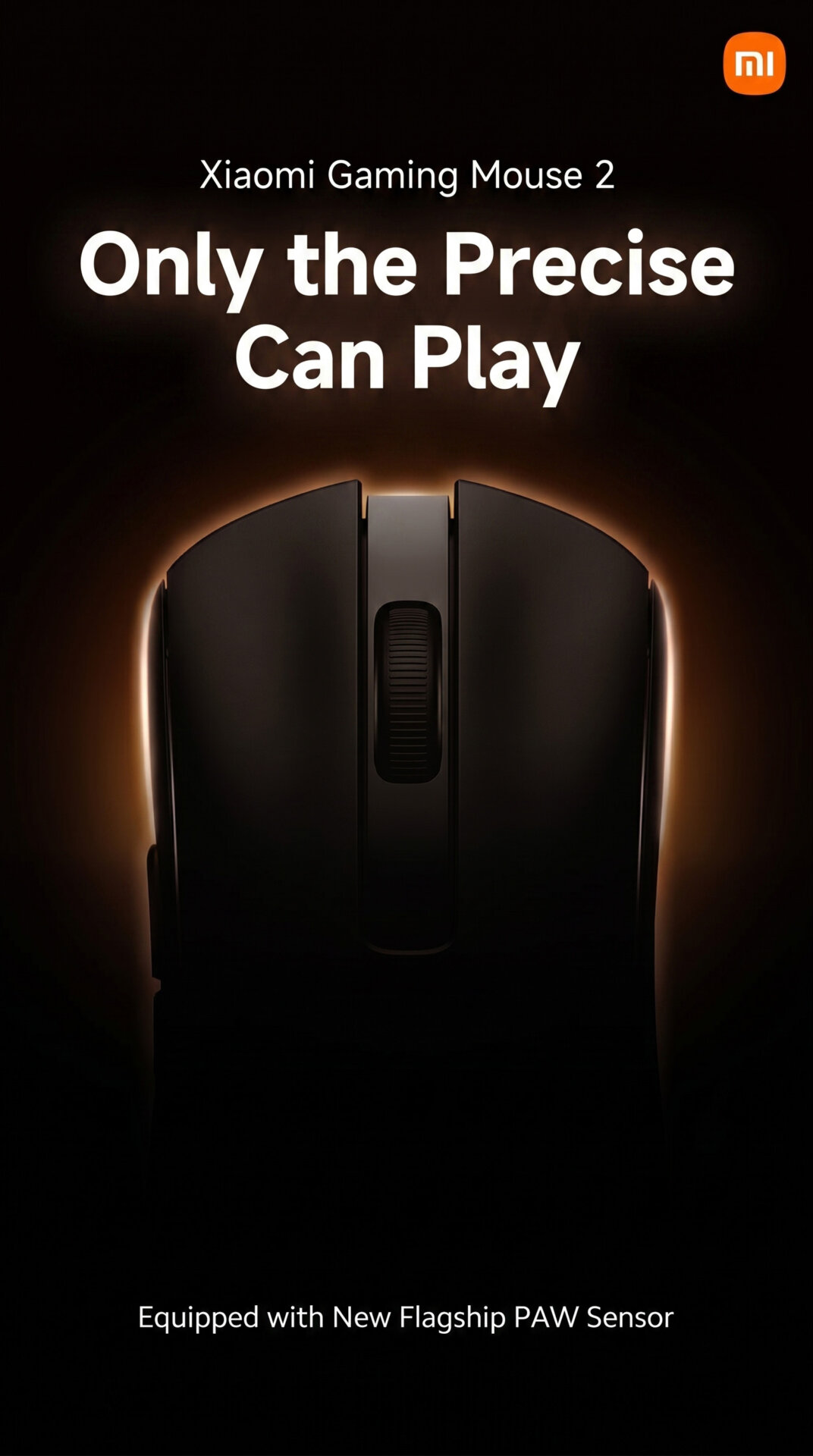
Xiaomi has officially pulled back the curtain on its latest peripheral powerhouse, the Xiaomi Gaming Mouse 2. Positioned as a professional-grade tool “born for e-sports,” this new entry into the Xiaomi ecosystem marks a significant technical leap over its predecessor, targeting hardcore gamers who demand pixel-perfect precision and ultra-low latency.
Flagship Performance: The PixArt PAW3955XM Breakthrough
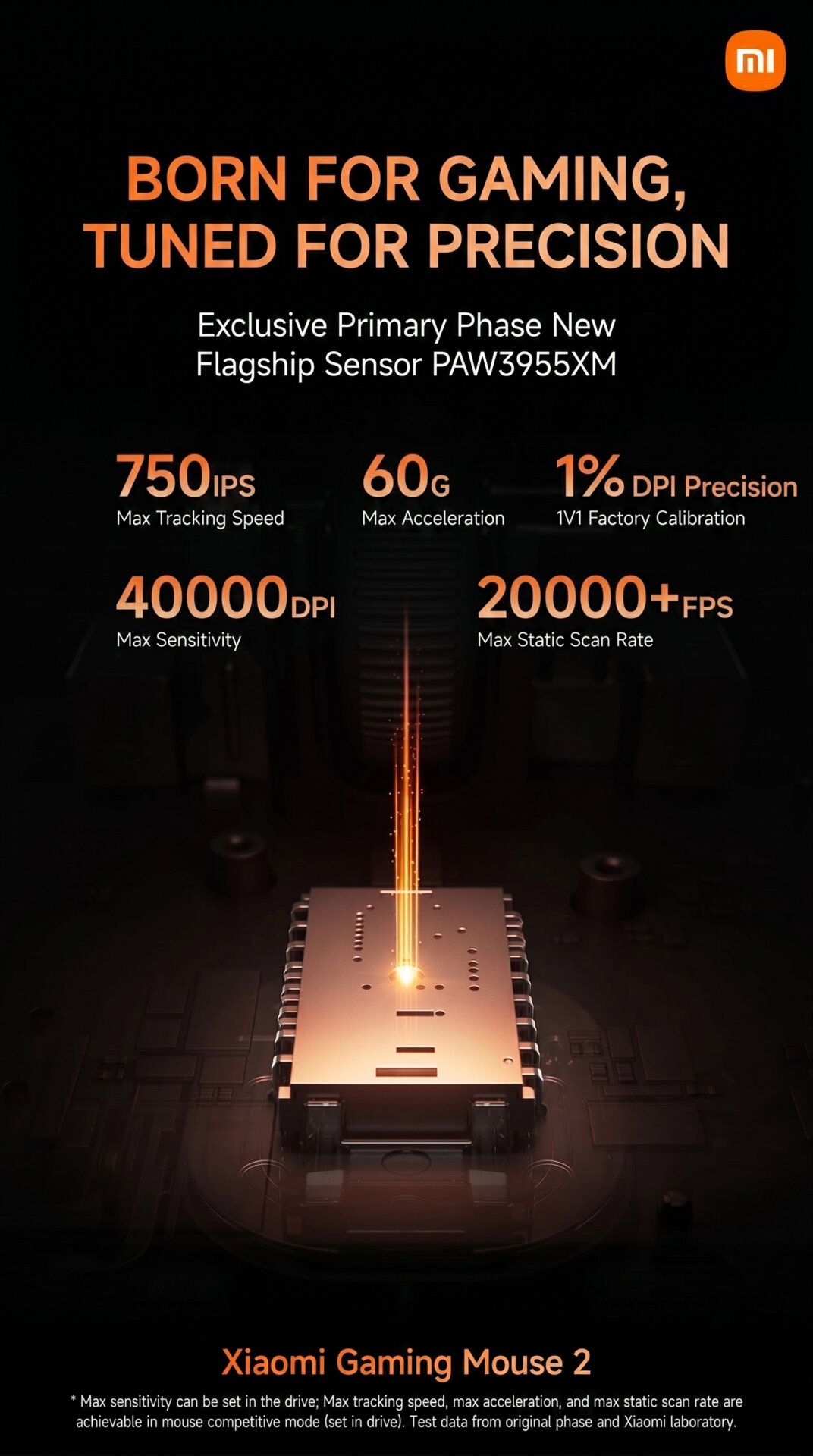
The core of the Xiaomi Gaming Mouse 2 is the exclusive PixArt PAW3955XM flagship sensor. This custom-tuned component allows the device to reach industry-leading performance metrics that rival the most expensive competitive mice on the market. Technical promotional materials. Highlight a massive focus on raw speed and accuracy.
The sensor’s technical breakdown includes:
- 40,000 DPI Sensitivity: Providing extreme granular control for high-resolution displays.
- 750 IPS Tracking Speed: Ensuring the mouse never loses track during high-velocity “flick” shots.
- 60G Maximum Acceleration: Designed to handle the most intense physical movements without sensor spin-out.
- 20,000+ FPS Static Scan Frame Rate: Delivering an incredibly high polling consistency.
Beyond raw numbers, Xiaomi is implementing 1V1 factory calibration to ensure a 1% DPI accuracy rate. Physically, the mouse features a sleek, symmetrical design with dual side buttons on the left, making it an ideal choice for a variety of grip styles used in competitive play.
Technical Specifications at a Glance
- Sensor: Exclusive PixArt PAW3955XM Flagship Sensor.
- Design Type: Symmetrical e-sports layout.
- Key Features: Dual side buttons, flagship-level main control chip.
- Tuning: Professional e-sports grade 1V1 factory calibration.
Market Impact and Ecosystem Integration
As this announcement originated from official Mijia and Xiaomi product channels in China, the Xiaomi Gaming Mouse 2 is currently introduced exclusively for the Chinese market. While the official pricing in USD ($) has yet to be finalized, Xiaomi’s aggressive pricing strategy typically positions such flagship-spec hardware at a fraction of the cost of Western competitors.
The mouse is expected to integrate seamlessly into the Xiaomi HyperConnect framework, allowing users to sync lighting profiles and performance macros across the broader Xiaomi HyperOS ecosystem. This integration ensures that the gaming experience remains consistent whether you are using a Xiaomi laptop or a desktop setup.