


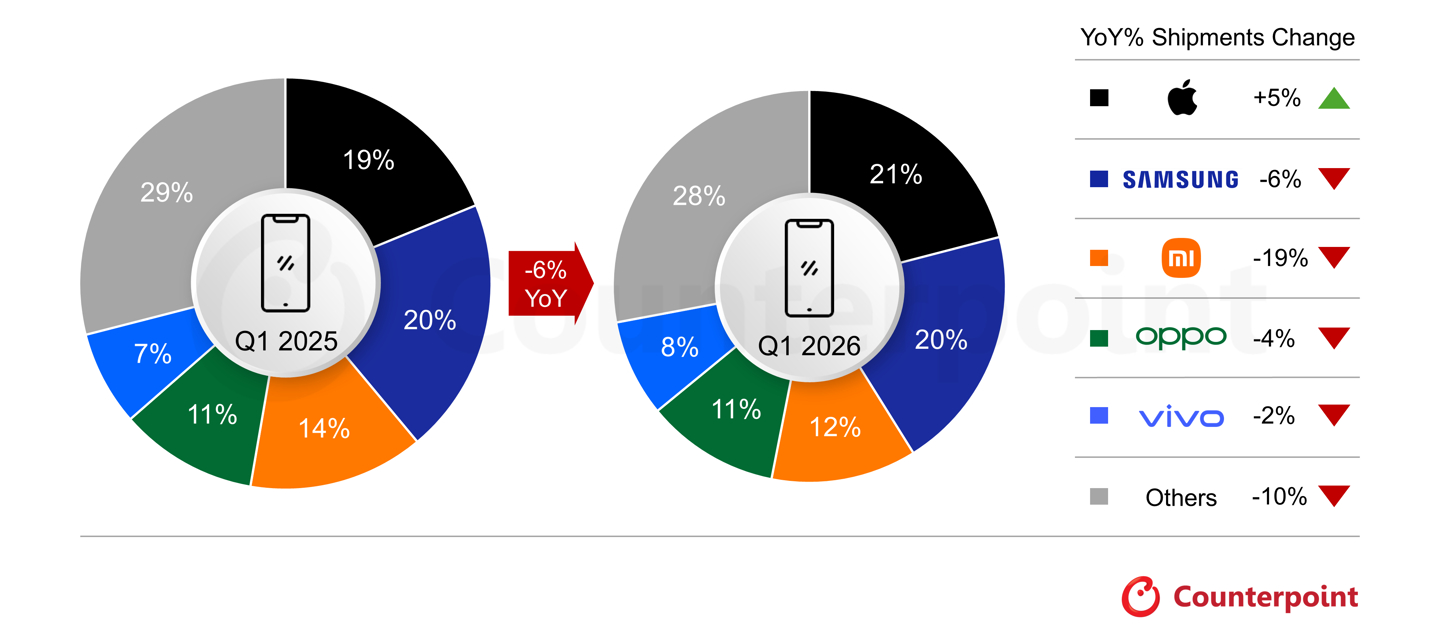
The global smartphone market is navigating a challenging landscape in the first quarter of 2026, heavily overshadowed by supply chain disruptions and surging costs. According to a Counterpoint Research report published on April 10, global smartphone shipments declined by 6% year-over-year. While Apple secured the top spot with a 21% market share and Xiaomi recorded a 19% volume drop, raw percentages do not tell the whole story. Beneath the surface, Xiaomi is actively restructuring its massive entry-level ecosystem to combat the industry-wide component crisis, aggressively pivoting toward premium devices like the Xiaomi 17 series to outmaneuver its top-tier rivals.
The Impact of the DRAM and NAND Shortage
The primary technical and economic driver behind this global market contraction is the severe shortage of DRAM and NAND memory components. This hardware deficit has drastically inflated production costs across the industry. Coupled with fragile consumer confidence stemming from geopolitical tensions in the Middle East, manufacturers have been forced to rethink their pricing and production strategies.
Here is where the strategic divergence between Xiaomi and its competitors becomes clear:
-
Why Was Xiaomi Disproportionately Affected? Historically, Xiaomi has dominated with an incredibly vast and affordable entry-level product lineup reaching millions globally. The surging costs of memory chips severely impact the already razor-thin profit margins of budget devices, making this segment highly vulnerable.
-
The Apple and Samsung Factor: Operating exclusively in the premium segment, Apple managed a 5% growth by passing costs onto consumers, aided by high demand for the iPhone 17 series and a closed ecosystem. Samsung, however, suffered a 6% decline due to the delayed launch of the Galaxy S26 series and weak entry-level demand, forcing them to rely heavily on the expensive Ultra models to maintain revenue.
The Xiaomi 17 Series: A Masterclass in Premium Positioning
The most critical and positive takeaway for Xiaomi in this report is the undeniable success of its high-end portfolio. Despite the overall drop in shipment volume, the high-performance Xiaomi 17 series is charting massive sales success, particularly in the domestic market.
While Samsung attempts to offset its entry-level losses by pushing the Galaxy S26 Ultra, Xiaomi is executing a much more agile version of this strategy. By deliberately streamlining and reducing its low-margin budget models, Xiaomi is consolidating its resources toward flagship-grade innovation and quality. This calculated move is significantly increasing the Average Selling Price (ASP) of Xiaomi devices, cementing the brand’s reputation in the ultra-premium tier alongside Apple and Samsung.



Do you censor messages?
I see that indeed!
i want to phone smooth
sales confirm dropped much cause no bring 17 pro max . Xiaomi company only focus China and Europe Market. OPPO and Vivo might one day overtake Xiaomi.
Just ordered the Find X9 Ultra because Xiaomi can’t or won’t support their smartphones. Mid of April and still on February security patch. I can see here in the comments and on update trackers a lot of other users having the same complaints. I guess Xiaomi has to learn it the hard way.