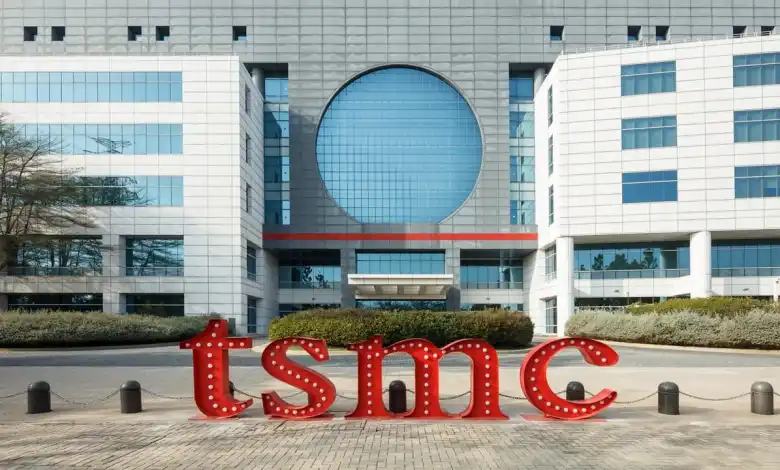

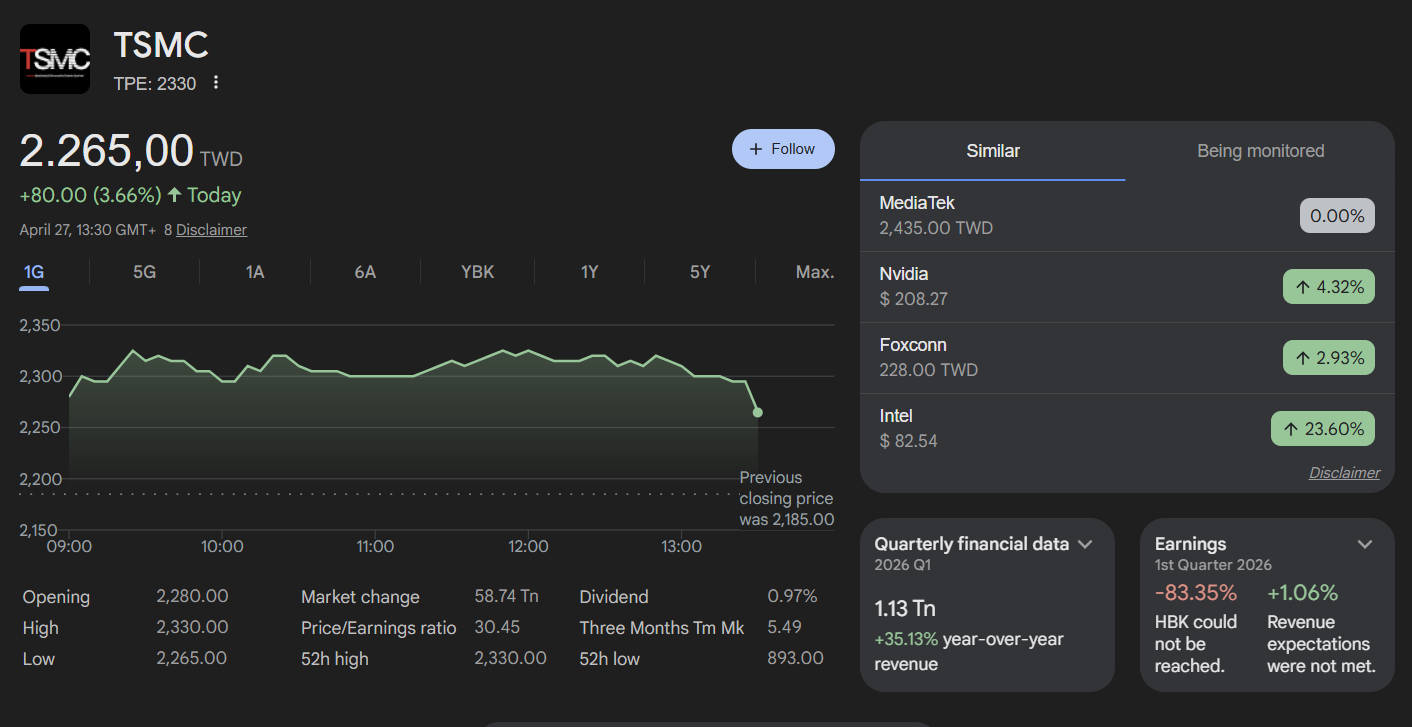
Taiwan Semiconductor Manufacturing Company (TSMC) has officially surged to become the world’s seventh-largest company, achieving a monumental market capitalization of $1.8 trillion. By surpassing industry giants like Meta and Saudi Aramco, TSMC has cemented its absolute dominance in the semiconductor space. While the stock has seen minor fluctuations, settling around $402.46 per share, the foundry’s Q1 2026 financial report paints a picture of unprecedented growth. But what does this massive financial leap mean for the end user? For the Xiaomi ecosystem, TSMC’s advanced lithography is the silent engine powering the future of Xiaomi HyperOS and our most premium devices.
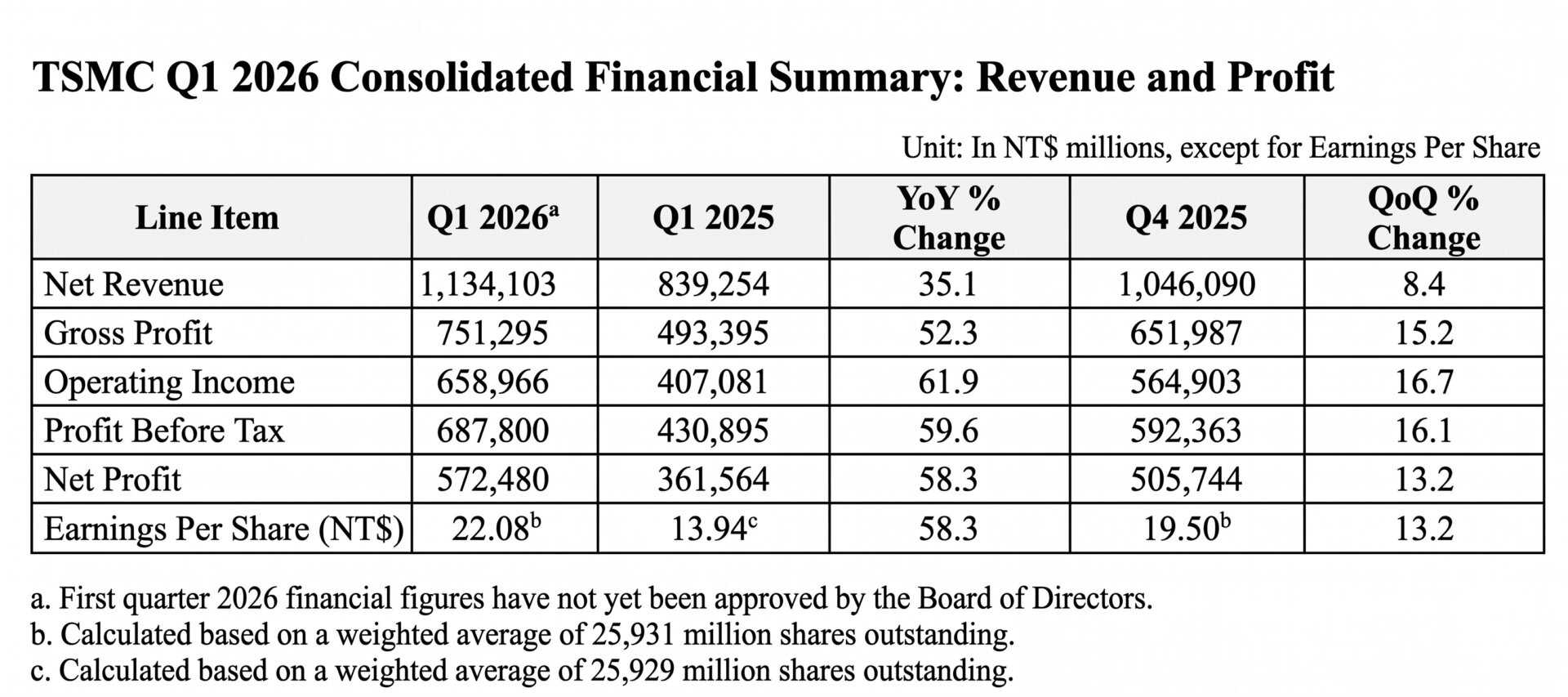
The Silicon Blueprint and Q1 2026 Financials
TSMC’s Q1 2026 financial report showcases staggering numbers driven largely by high-performance computing, which grew 20% quarter-over-quarter. Consolidated revenue reached approximately $35.4 billion (converted from NT$1,134.1 billion), marking a 35.1% year-on-year increase. Net profit shattered estimates, coming in at roughly $17.8 billion (NT$572.5 billion), with an impressive gross margin of 66.2%.
For Xiaomi, TSMC is not just a supplier; it is the critical manufacturing partner that brings Xiaomi’s in-house R&D to life. TSMC is directly responsible for forging Xiaomi’s proprietary silicon:
-
Surge C Series (ISP): Image Signal Processors like the Surge C1, C2, and C3. These chips provide hardware-level processing for superior color accuracy, low-light computational photography, and raw image rendering.
-
Surge P Series (Power Management): Chips like the P1 and P2 that safely control the thermal output and power flow for Xiaomi’s ultra-fast wired and wireless charging protocols.
-
Surge G Series (Battery Management): Real-time voltage and current tracking chips, such as the Surge G1, designed to maximize battery lifespan and ensure strict safety compliance under heavy loads.
Furthermore, industry reports indicate that Xiaomi is actively developing a new proprietary Application Processor (AP). If this custom SoC enters mass production, it will undoubtedly rely on TSMC’s cutting-edge 4nm (N4) or 3nm (N3E) nodes.
Beyond custom silicon, TSMC is the physical foundry behind the flagship chips powering the broader ecosystem, including Qualcomm’s top-tier processors like the Snapdragon 8 Elite, and MediaTek’s flagship Dimensity series (such as the Dimensity 9300).
Supported Device Categories
While this is an industry-level manufacturing shift, the benefits directly impact the performance and thermal efficiency of several device families:
-
Xiaomi Premium Flagships: Devices utilizing Snapdragon 8 Elite and in-house Surge C/P/G chips.
-
POCO Global Lineup: High-performance gaming and enthusiast devices running flagship MediaTek Dimensity or Snapdragon architectures.
-
REDMI Series: Mid-to-high tier smartphones benefiting from the trickle-down efficiency of TSMC’s refined 4nm manufacturing nodes.
The precision of TSMC’s 3nm and 4nm fabrication nodes directly translates to real-world battery endurance and thermal stability. When paired with the lightweight, deeply optimized kernel of Xiaomi HyperOS, devices can sustain peak CPU/GPU clock speeds longer without thermal throttling. Whether it is a dedicated Surge chip managing a 120W fast charge or a Snapdragon 8 Elite rendering complex gaming textures, TSMC’s silicon quality ensures that the hardware can keep pace with the fluid animations and heavy multitasking demands of Xiaomi’s ecosystem.ewest firmwares specifically calibrated for your device’s hardware.