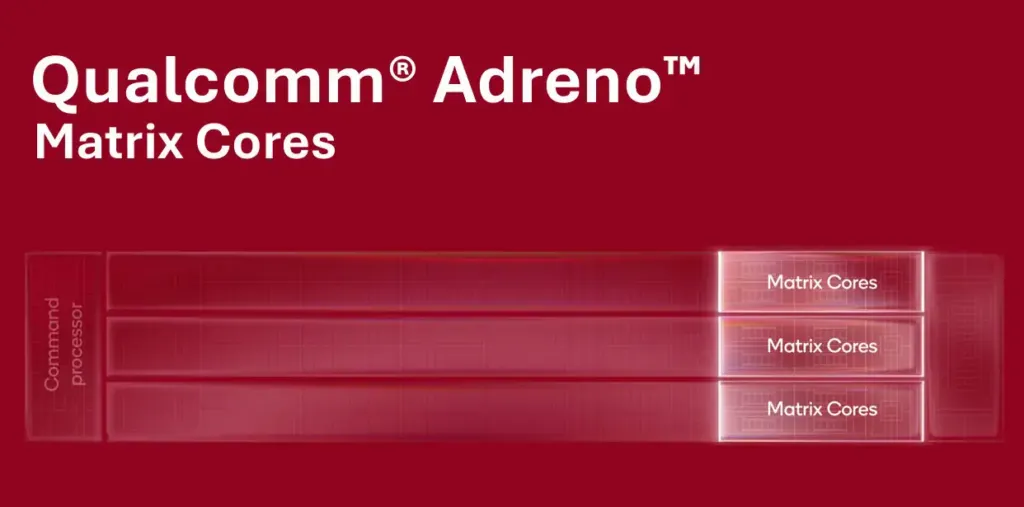

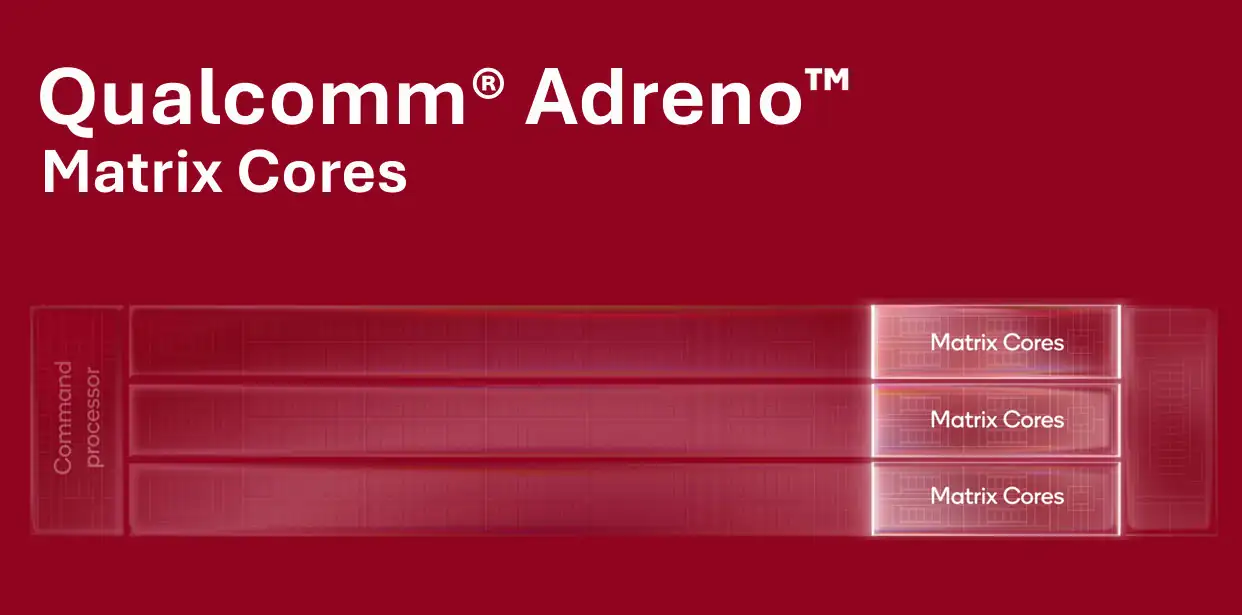
Qualcomm has revealed new details about its next-generation Adreno GPU, highlighting the addition of dedicated matrix cores designed to improve on-device AI processing. According to Android Authority, the GPU will feature three matrix cores aimed at reducing latency and power consumption for local AI tasks.
This marks an expansion of Qualcomm’s matrix computation technology, which was first introduced in the CPU last year with SME (Scalable Matrix Extension) to accelerate AI workloads. Now, the similar approach is applied within the GPU to support Qualcomm’s new Adreno Neural Fusion technology.
Adreno Neural Fusion Promises Smoother Graphics with Lower Power Use
Adreno Neural Fusion improves the visual output by reducing flickering, ghosting, and other image artifacts to provide more stable and detailed rendering. Qualcomm claims this can lower GPU power consumption by up to 40% compared to previous solutions.
For gamers, the most noticeable benefit will be enhanced frame generation and upscaling capabilities. Qualcomm confirmed that major game engines like Unreal Engine and Unity will support Adreno Neural Fusion, which should simplify developer adoption and quickly expand compatible titles.
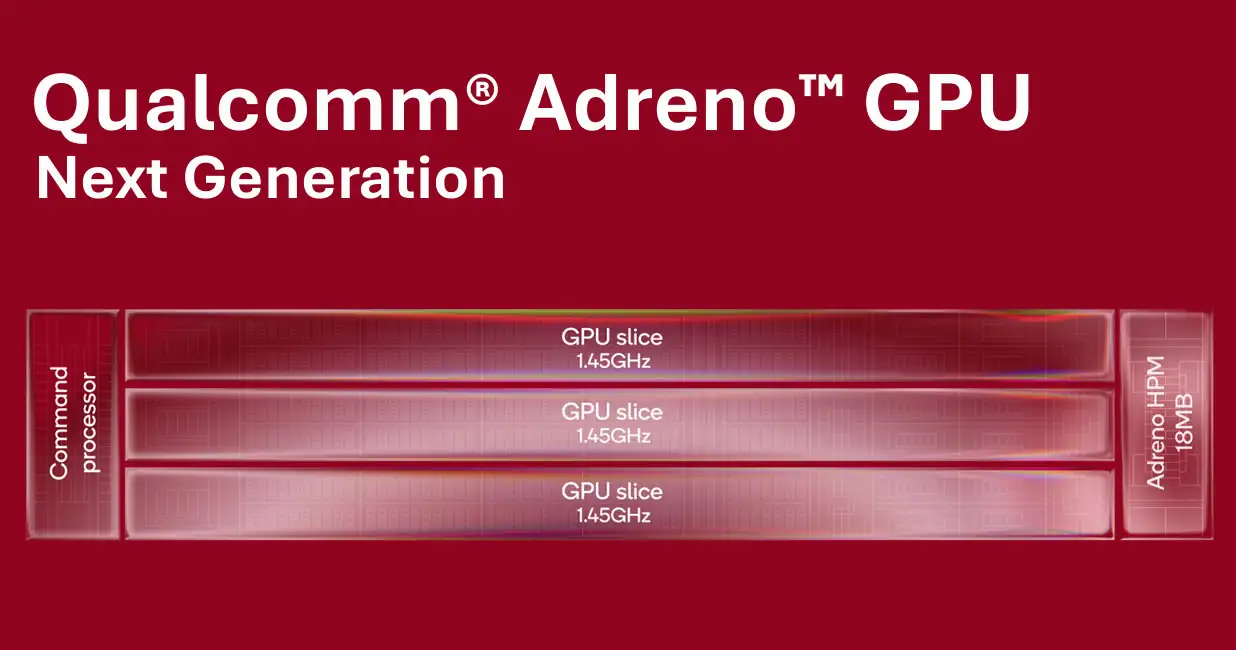
Improved Performance and Efficiency with New GPU Architecture
The upcoming Snapdragon platform will use a tri-cluster GPU design, dividing shader cores and other GPU components into three independent areas. This allows finer control over power and performance allocation. The new Adreno GPU operates at up to 1.45GHz, exceeding the 1.2GHz of the Snapdragon 8 Gen 1.
Memory specifications include 18MB of high-performance Adreno cache, and Qualcomm states the GPU will deliver around a 12% boost in power efficiency. The overall chip will also feature the Snapdragon X105 modem and the FastConnect 8800 connectivity suite.
CPU Upgrades Complement GPU Enhancements
The CPU side features a new Oryon core reaching speeds up to 5GHz, a first for smartphone processors. Qualcomm’s FlexCache architecture is designed to improve instruction fetching efficiency. These combined upgrades indicate strong performance for the Snapdragon 8 Gen 6 series.
Still, the biggest challenge Qualcomm and handset manufacturers face will be managing power consumption and heat generation to ensure smooth operation.
Source: ithome.com