
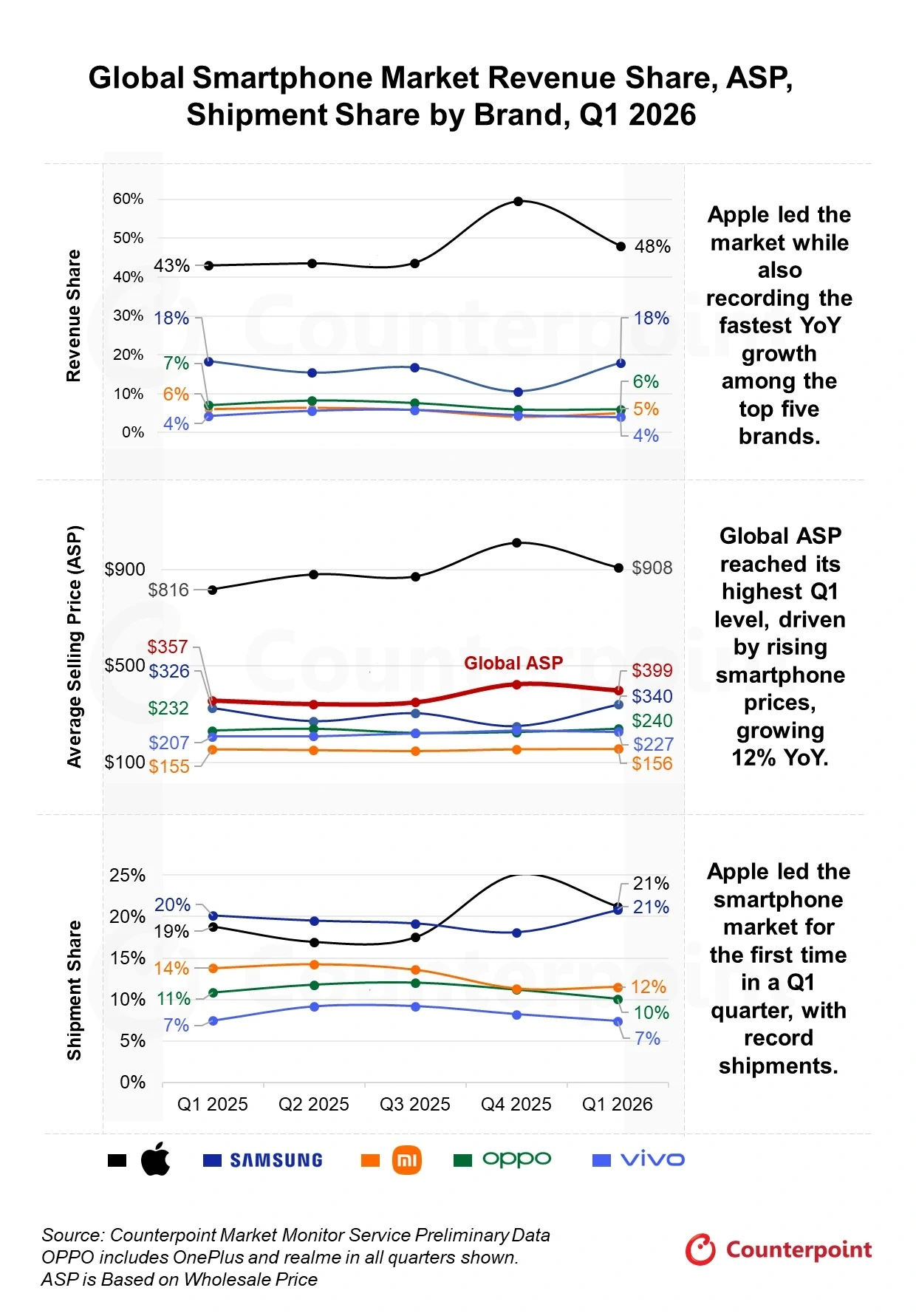
The global smartphone landscape has seen significant shifts in the first quarter of 2026. According to the latest Counterpoint Research report, global smartphone revenue climbed 8% year-on-year, reaching $117 billion. While Apple dominated with a staggering 48% revenue share, the industry at large—including Xiaomi—is grappling with a severe DRAM shortage that is reshaping market dynamics, production volumes, and component pricing across the board.
The DRAM Crisis and Market Dynamics
The primary technical bottleneck driving these market fluctuations is a widespread memory chip crisis. Apple has managed to maintain its commanding lead largely due to the sustained strong sales of the iPhone 17 and iPhone 17 Pro Max. By successfully absorbing cost pressures and maintaining stable pricing despite rising material costs, Apple secured an 11% year-over-year increase in average selling price.
Samsung secured the second spot in both revenue and shipments. Although their shipment numbers remained flat year-over-year, a 4% increase in their average selling price supported a corresponding 4% increase in total revenue.
Xiaomi, however, faces a unique set of challenges in this climate. The company’s shipments experienced a 19% year-on-year decrease, alongside an 18% decline in revenue. The root cause of this contraction is the ongoing DRAM shortage. Because Xiaomi commands a massive market share in the entry-level and mid-range sectors, their production lines are highly sensitive to component price volatility. The memory crisis has directly impacted the manufacturing and deployment of affordable devices in most global regions, with Latin America being a notable exception where performance remained stable.
Affected Devices / Market Segments
-
REDMI Series: Entry-level and mid-range REDMI smartphones are the most heavily impacted by the rising costs and limited availability of DRAM components.
-
POCO Series: Mid-range performance models that rely on cost-effective, high-capacity memory configurations are facing production bottlenecks.
-
Competitor Devices: The broader industry is feeling the strain; even Apple’s upcoming iPhone 18 is expected to face price hikes as existing DRAM inventories deplete.
The current DRAM shortage is an industry-wide hardware constraint with real-world financial implications for consumers. With component reserves slowly depleting globally, buyers should prepare for potential price increases across all smartphone tiers in the coming months. For the end-user, this places an unprecedented premium on highly optimized software—when hardware becomes expensive and scarce, the operating system must do the heavy lifting to ensure smooth, reliable performance.