


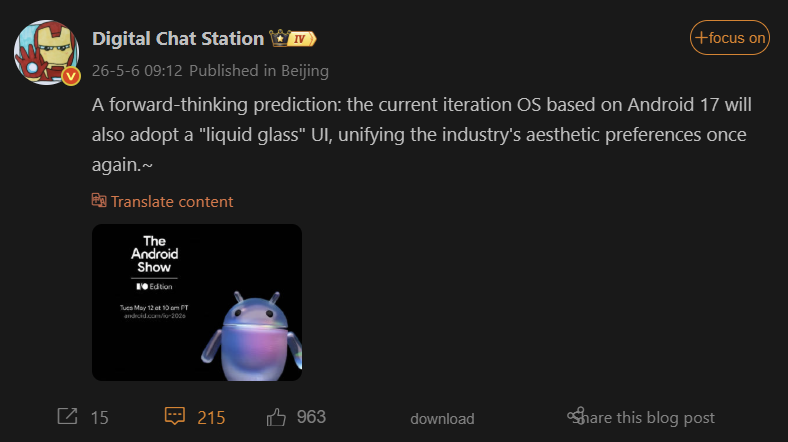
The Xiaomi software ecosystem is bracing for a significant aesthetic shift. According to a recent leak from the leaker Digital Chat Station (DCS) on Weibo, the HyperOS 4 based on Android 17 will adopt a “Liquid Glass” user interface. This design overhaul is expected to unify the industry’s aesthetic preferences, moving toward a more fluid and translucent visual language.
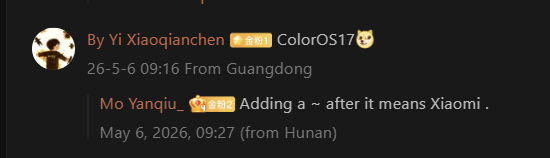
The leak is specifically tied to Xiaomi due to DCS’s use of the “~” character at the end of the post, which is a known identifier for the brand in the leaker’s community. This suggests that Xiaomi HyperOS 4 will be the primary vessel for this new design language. Further corroborating this, Google today teased a “Liquid Glass” inspired Android mascot for the upcoming Google I/O on May 12, urging fans to stay tuned for the next evolution of Android.
The New Blur System
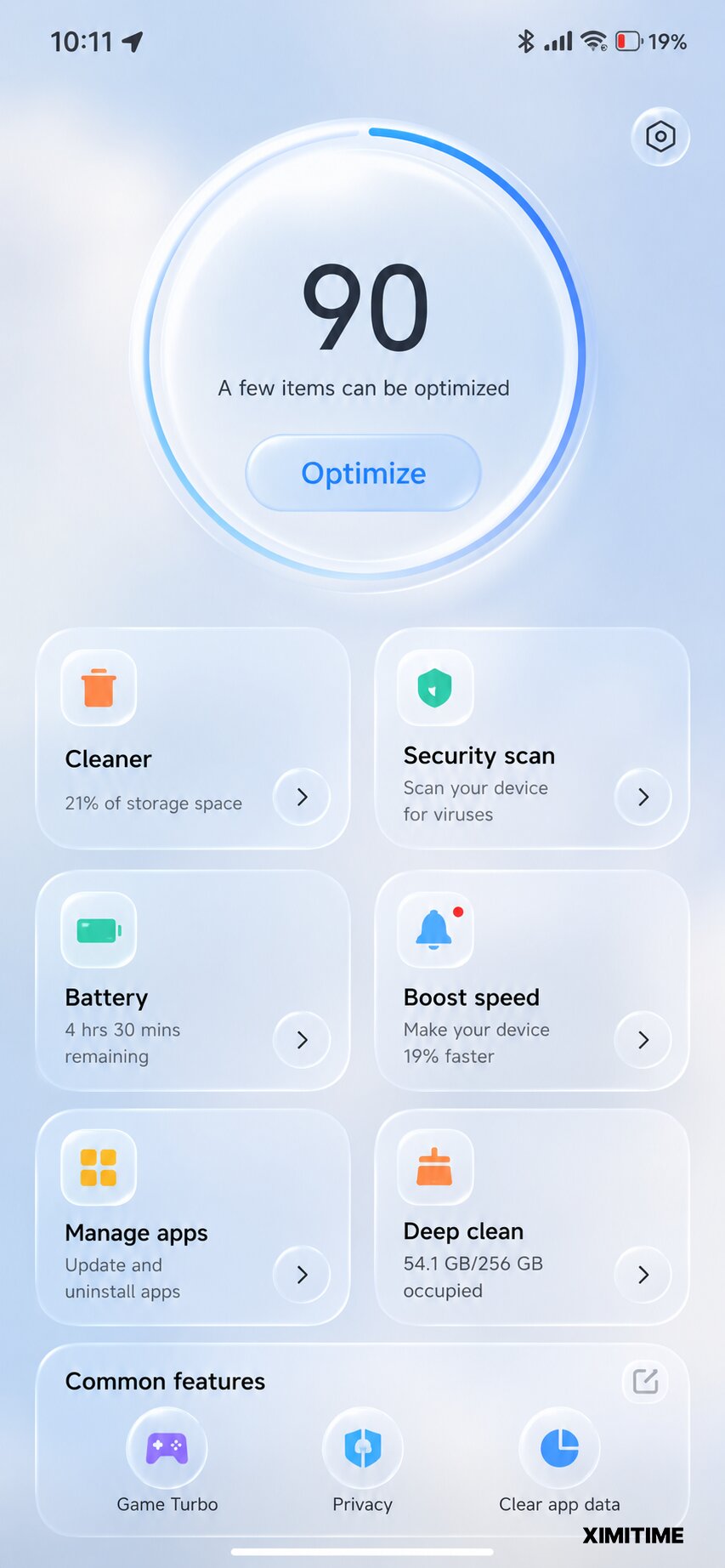
Xiaomi has a long-standing history of refining its interface using Apple-inspired design principles, often blending the fluidity of iOS with the robust functionality of Android. Xiaomi has already begun laying the groundwork for this visual transition. Evidence of the “Liquid Glass” implementation has been spotted in the latest native system keyboard application, which is currently testing a sophisticated new blur system. This advanced blur effect is designed to provide better depth and a more premium feel, serving as a precursor to the full HyperOS 4 aesthetic.
Affected Devices and Performance Scaling
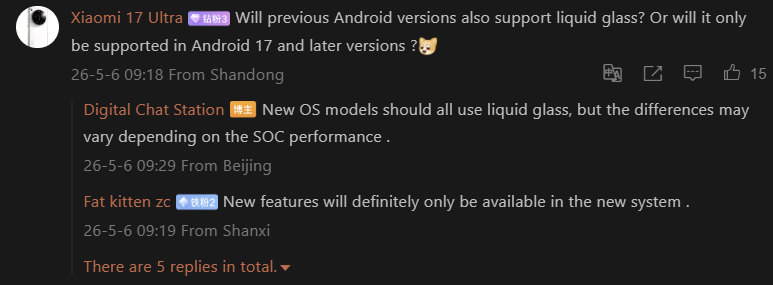
While “Liquid Glass” is the future of the interface, it will not be available on all devices. Because high-quality blur effects and glass textures require significant GPU resources, the implementation will vary depending on the SoC performance of the device. High-end flagship models will receive the full “Liquid Glass” experience, while entry-level devices may feature a simplified version to maintain system fluidity.
The following device lineups are expected to be the primary recipients of this feature:
-
Xiaomi 17 and 17T Series
-
Xiaomi 15 and 15T Pro
-
Xiaomi 14 and 13 Series
-
POCO F7 – F8 Series
Notably, the Android 17 Developer Preview is already officially out for the Xiaomi 17 series and Xiaomi 15T Pro, marking these as the first devices to test the underlying foundations of the upcoming system.
Xiaomi’s decision to embrace “Liquid Glass” reflects a commitment to premium design and technical parity with the latest Android standards. By testing these elements early through standalone apps like the system keyboard, the company is ensuring a more stable rollout for the global market.


Unfortunately, Xiaomi’s software update and distribution process to devices is far behind other brands. As someone using the 15 t pro, I am still waiting for HyperOS 3.1. My device has a TR warranty. Even though it is May, talking about HyperOS 3.3 already seems early to me because most users are still waiting for the previous updates.
My Redmi Note 13 Pro 5G has not updated since March 2024, and it’s absurd, it will soon be discontinued, if it hasn’t already, and without updates. I have had Xiaomi devices since their launch, even before the brand arrived in Brazil, and I am disappointed.
My Redmi Note 13 Pro 5G has not updated since March 2024, and it’s absurd, it will soon be discontinued, if it hasn’t already, and without updates. I have had Xiaomi devices since their launch, even before the brand arrived in Brazil, and I am disappointed.
I am currently using Hyper OS 3 and I want to use it as an update for my Redmi Note 12 5G phone as well. Like many others, I want to update it. Every time you provide an update, our Redmi Note 12 5G does not include Hyper OS 3. Because of that, I feel disappointed. Please provide the Hyper OS 3 update for us as well. I kindly request and suggest this.
I am currently using Hyper OS 3 and I want to use it as an update for my Redmi Note 12 5G phone as well. Like many others, I want to update it. Every time you provide an update, our Redmi Note 12 5G does not include Hyper OS 3. Because of that, I feel disappointed. Please provide the Hyper OS 3 update for us as well. I kindly request and suggest this.
I am currently using Hyper OS 3 and I want to use it as an update for my Redmi Note 12 5G phone as well. I also want to update it similarly. Every time you provide an update, our Redmi Note 12 5G does not include Hyper OS 3. Because of that, I feel disappointed. Please provide the Hyper OS 3 update for us as well. I kindly request and suggest this.
They should name it liquid crystal.
want hyper os 4
want hyper os 4, and want to change the appearance, yes,
Currently I am using Hyper OS 3 and I want to use it as an update for my Redmi 12 phone as well. I also want to update my phone in the same way. Every time you provide an update, our Redmi 12 does not include Hyper OS 3. Because of that, I feel disappointed. Please provide the Hyper OS 3 update for us as well. I kindly request and suggest this.
Currently I am using Hyper OS 3 and I want to use it as an update for my Redmi 12 phone as well. I also want to update my phone in the same way. Every time you provide an update, our Redmi 12 does not include Hyper OS 3. Because of that, I feel disappointed. Please provide the Hyper OS 3 update for us as well. I kindly request and suggest this.
my redmi note 13 pro pro 5g the dynamic island went down and does not come back anymore, it no longer centers on the camera hole
my redmi note 13 pro pro 5g the dynamic island went down and does not come back no longer centers on the camera hole
my redmi note 13 pro pro 5g the dynamic island went down and does not come back anymore, it no longer centers on the camera hole
my redmi note 13 pro pro 5g the dynamic island went down and does not come back anymore, it no longer centers on the camera hole
I bought redmi 15 4g in January I never received security update or software update, am using global rom wboxidc