


Google has officially expanded its Android Developer Verification Program with support from major Android ecosystem partners, including Honor, OPPO, Samsung, Transsion, vivo, and Xiaomi. The new system will begin enforcement on September 30, 2026, first in Brazil, Indonesia, Singapore, and Thailand, before expanding globally from 2027 and beyond. For Xiaomi users, this means apps distributed through GetApps and other supported Android app stores will gradually move toward stricter developer identity checks designed to reduce malware, fake apps, and anonymous abuse.
What Is Android Developer Verification?
Android Developer Verification is a new identity-based security layer for Android app distribution. Instead of only checking where an app comes from, Android will also verify whether the developer behind that app has registered valid identity information. Google says this system is designed to make it harder for malicious developers to repeatedly publish harmful APKs under anonymous or disposable identities.

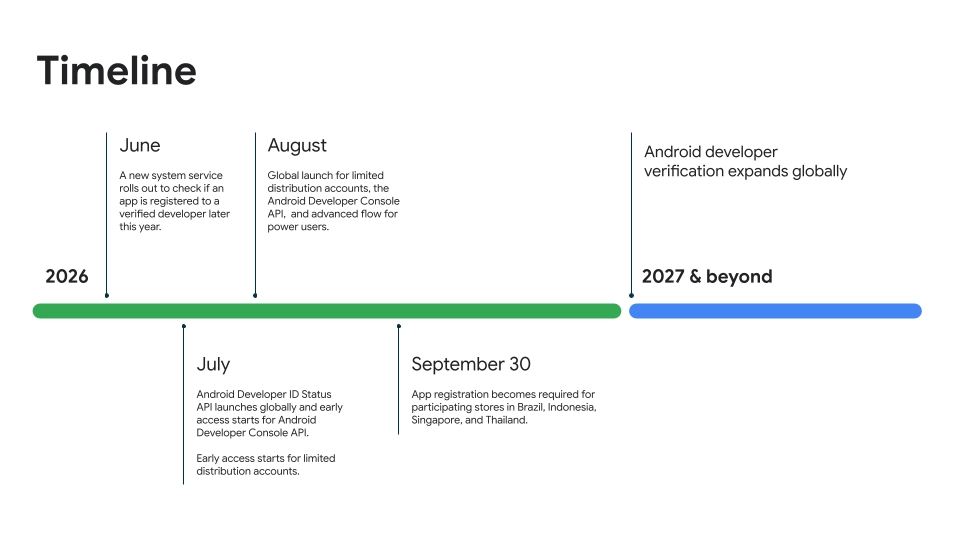
The program will initially apply to certified Android devices in four countries: Brazil, Indonesia, Singapore, and Thailand. From September 30, 2026, apps installed or updated on certified Android devices in these regions must be registered by a verified developer. Google says global rollout will continue in 2027 and beyond.
Xiaomi GetApps Is Part of the Initial Store Rollout
Google confirmed that the first rollout will cover app installations from seven major Android app stores. This is important because the change is not limited to Google Play. It also includes OEM app stores used by millions of Android users worldwide.
The supported stores include:
-
Google (Google Play)
-
Honor (HONOR App Market)
-
OPlus (OPPO App Market)
-
Samsung (Galaxy Store)
-
Transsion (Palm Store)
-
vivo (V-Appstore)
-
Xiaomi (GetApps)
For Xiaomi, REDMI, and POCO users, this means GetApps will be aligned with Google’s verified developer model in the participating regions. The goal is not to remove third-party app distribution completely, but to reduce the risk of malware, fake banking apps, scam APKs, and repackaged apps being installed from unknown developers.
Technical Change: com.google.android.verifier
According to the provided rollout information, Android devices running Android 8 and above will begin receiving a new system service package named: com.google.android.verifier.
This service is expected to remain inactive until the verification requirement becomes active in the user’s region. Once enabled, it will help Android check whether an app package is linked to a verified developer identity before allowing normal installation or update behavior.
This is especially relevant for Xiaomi HyperOS users because many current Xiaomi, REDMI, and POCO devices are certified Android devices with Google Mobile Services in global markets. In practice, the feature may become part of the background security layer rather than a visible user-facing app.
Google’s official timeline also confirms that the September 2026 enforcement phase will require apps to be registered by verified developers in the first four countries, while global expansion will continue afterward.
Google is also preparing two exception paths to balance security with Android’s open app ecosystem.
The first is Limited Distribution Accounts. This option is designed for students, hobbyists, and individual enthusiasts who want to test or share small apps without going through the full commercial developer registration flow. These accounts do not require a developer registration fee or government ID, but apps can only be installed on a maximum of 20 devices.
The second is the advanced bypass flow for users who still need to install apps from unverified developers. This path is intentionally difficult. Users may need to go through deeper settings, confirm repeated risk warnings, and wait before completing installation. Google’s goal is to prevent social engineering attacks where scammers pressure users to install a malicious APK quickly.
What Developers Should Do Now
Developers who distribute apps through Google Play, Xiaomi GetApps, or other Android stores should prepare before the September 30 deadline. Google is also introducing two APIs to simplify this process:
- Android Developer ID Status API: Allows stores and services to check whether a package name is properly registered.
- Android Developer Console API: Allows developers to register and manage package names more directly inside their own workflow.
For developers targeting Xiaomi users in Brazil, Indonesia, Singapore, or Thailand, completing verification early will be important to avoid installation or update problems after enforcement begins.


this is genuinely the dumbest thing Google will do