


The first alleged home-screen screenshot of Xiaomi HyperOS 4 has been published on Weibo, revealing redesigned system icons, stronger icon shadows, and a new vertical widget slider. More importantly, the partially visible identification numbers in the screenshot reportedly belong to HONGKONG, the codename associated with the highest-end device in the upcoming Xiaomi 18 series.
This detail suggests that the screenshot may not come from a generic HyperOS 4 development device. Instead, Xiaomi could already be testing its next major operating system directly on one of its most advanced Xiaomi 18 series prototypes. HyperOS 4 is to accompany the Xiaomi 18 generation and use Android 17 as its base.
Screenshot reportedly captured on HONGKONG
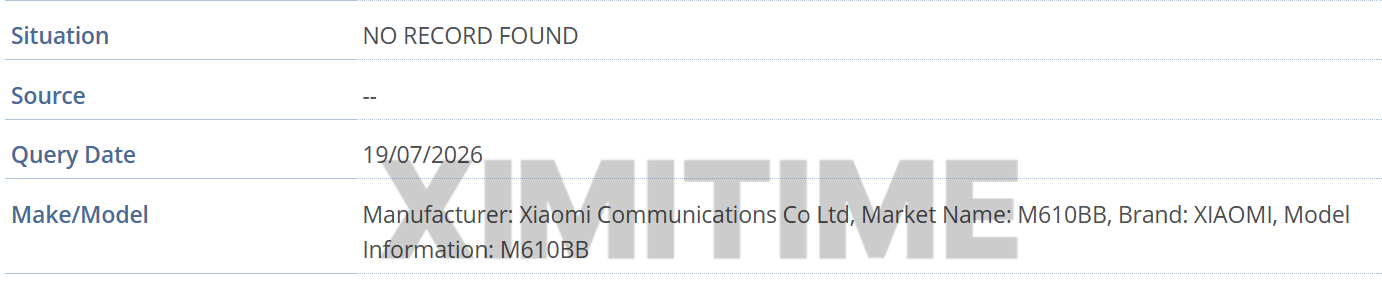
Several faint number sequences can be seen across the Chinese screenshot. According to the available device identification information, these numbers are linked to the device internally known as HONGKONG.
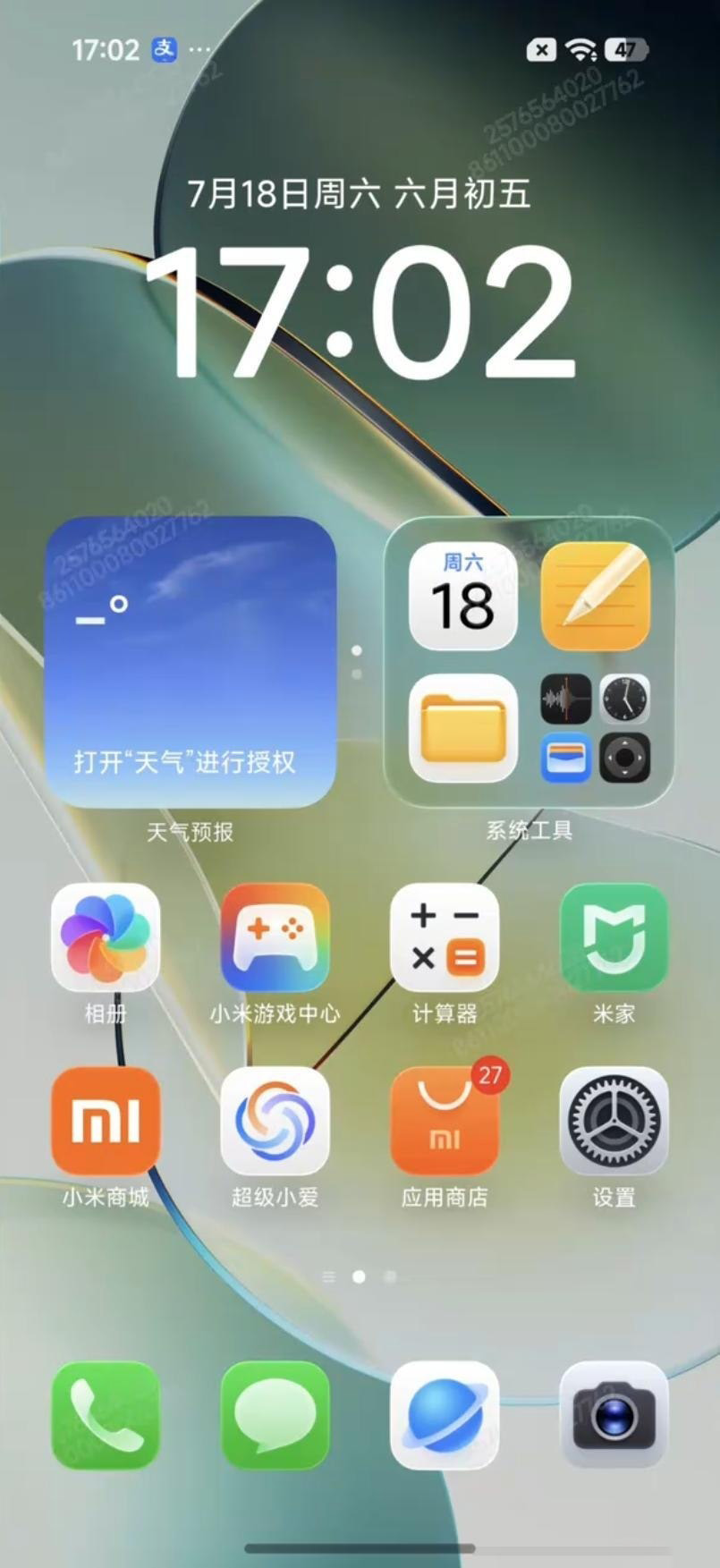
HONGKONG is believed to represent the highest-positioned model in the Xiaomi 18 family. Therefore, the leak may offer an early look at both the HyperOS 4 interface and the software currently being tested on Xiaomi’s next top-tier flagship.
Previous information has also connected the Q5 platform and HONGKONG codename with the Xiaomi 18 series rather than a MIX-branded device. However, Xiaomi has not officially confirmed the commercial name of the phone.
HyperOS 4 compared with HyperOS 3
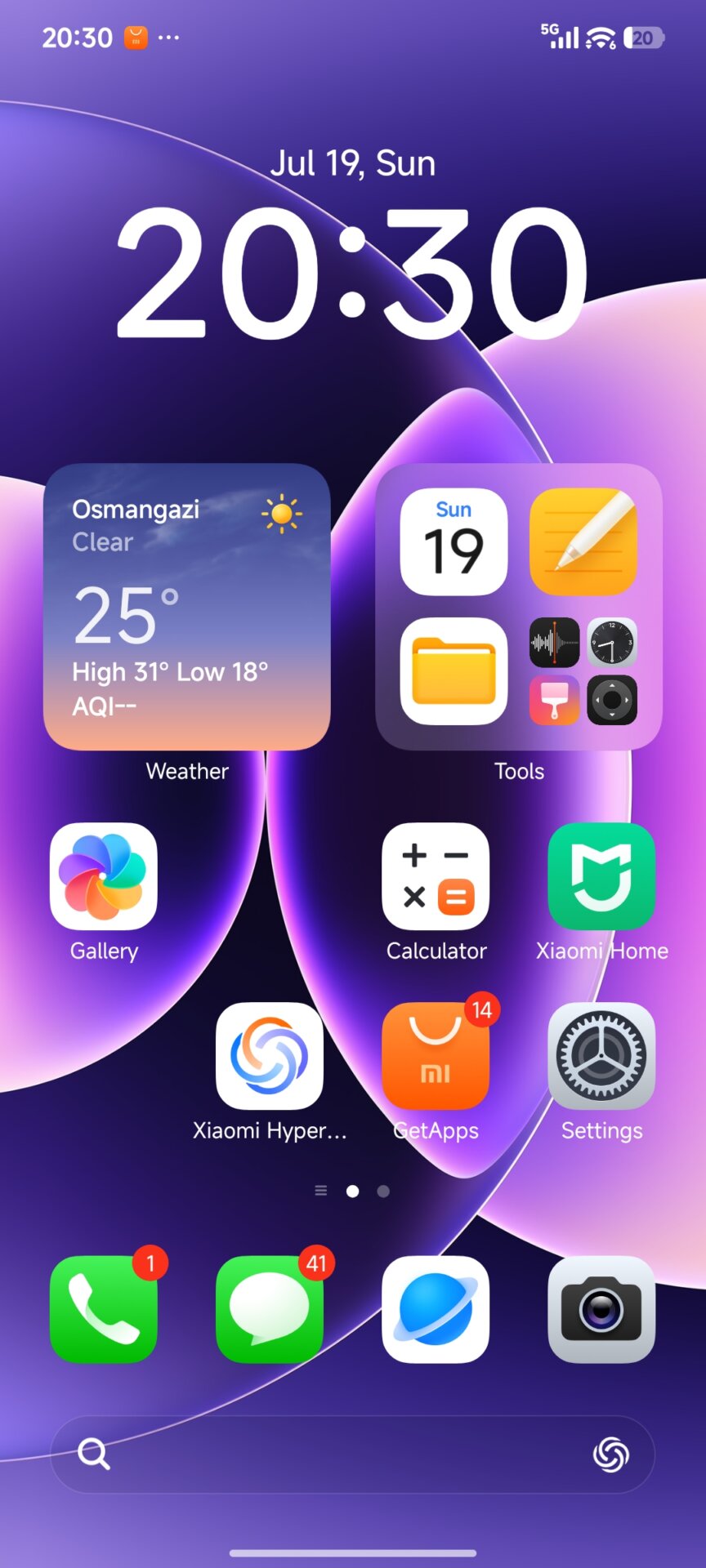
The English screenshot shows HyperOS 3, while the Chinese screenshot reportedly shows an early HyperOS 4 build. Although the general home-screen layout remains similar, several differences can be seen.
New vertical widget slider
HyperOS 4 adds a vertically arranged page indicator between the weather widget and the system tools folder. The dots suggest that users may be able to swipe vertically between different widget cards without adding another large widget to the home screen.
HyperOS 3 does not show this control in the same area. This makes the vertical widget slider one of the clearest functional changes visible in the comparison.
Stronger icon shadows
The HyperOS 4 icons cast more noticeable shadows beneath their rounded-square backgrounds. This creates greater separation between the icons and wallpaper, giving the interface a more layered and three-dimensional appearance.
The effect is especially visible on:
- Gallery
- Game Center
- Calculator
- Mi Home
- Mi Store
- GetApps
- Settings
- Phone
- Messages
- Browser
- Camera
HyperOS 3 icons look flatter and cleaner by comparison, while HyperOS 4 appears to emphasize depth.
Redesigned Settings icon
The Settings icon has received one of the most obvious changes. HyperOS 4 uses a darker and more detailed mechanical design, with deeper shadows around the internal circular elements.
The HyperOS 3 version has a lighter silver appearance. The new version looks more realistic and visually heavier.
Updated Camera icon
The Camera icon also appears more detailed. Its body uses stronger shading, while the lens contains a brighter blue-purple reflection. The deeper black areas and prominent lens effect make it look more three-dimensional than the HyperOS 3 icon.
New Game Center icon
The Chinese HyperOS 4 screenshot includes Xiaomi Game Center, represented by a white controller on a blue, orange, and purple gradient background. Its glossy gradient and strong shadow fit the updated visual language.
Refined Calculator icon
The Calculator icon retains the familiar mathematical symbols and orange equals key, but the elements appear larger and more prominent. The stronger shadow underneath the icon also makes it stand out more clearly from the background.
Softer Gallery and Mi Home icons
The Gallery icon keeps Xiaomi’s multicolored flower design, but its gradients appear softer. The Mi Home icon also retains its green background and white logo, with more subtle depth and shading.
More translucent folder design
The system tools folder uses a transparent, glass-like background that allows more of the wallpaper to remain visible. Its internal icons have clearer shadows and separation, producing a more layered appearance than the HyperOS 3 folder.
Not a complete home-screen redesign
Despite these visual changes, HyperOS 4 does not appear to completely replace Xiaomi’s current home-screen structure. It still uses:
- A large clock near the top
- Two main widget areas
- A four-column application grid
- A four-icon bottom dock
- Rounded-square system icons
- A centered home-screen page indicator
The differences are mostly focused on icon depth, shadows, translucency, widget navigation, and small graphical refinements.
What the leak tells us
The screenshot is particularly important because it apparently connects three developments: the first visible HyperOS 4 home-screen changes, Xiaomi’s Android 17 software testing, and the HONGKONG flagship prototype from the Xiaomi 18 series.
However, this remains an early leaked build. Xiaomi may modify the icons, widgets, spacing, or visual effects before the public release. The company has not officially confirmed the screenshot, the HONGKONG device’s final name, or the exact HyperOS 4 design.


smaller navigation lines huh? quite interesting i like that
Color pallet?
battery limit?
no no no no