
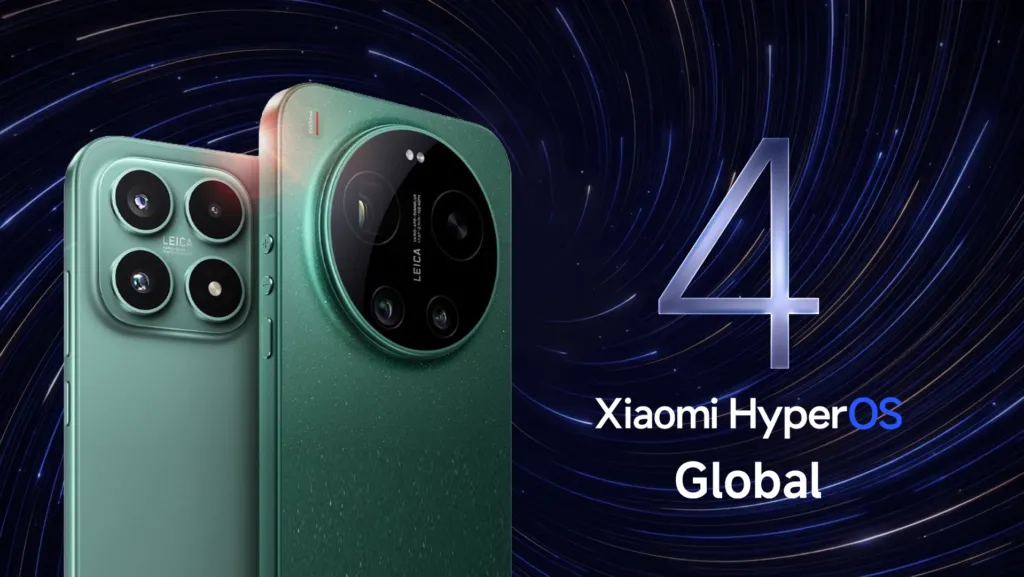

Xiaomi has officially opened recruitment for the HyperOS 4 Global Beta program. The first wave covers the Xiaomi 17 Ultra, Leica Leitzphone powered by Xiaomi, and Xiaomi 17. The program is limited to eligible Global and EEA versions of the listed models.
HyperOS 4 Beta recruitment starts globally
Users with an eligible phone can apply through Xiaomi Community → ME → Beta testing → Recruiting test. They must complete the questionnaire before checking their application result on the same page. Xiaomi also makes it clear that the beta is an early software release and does not have a fixed release schedule.
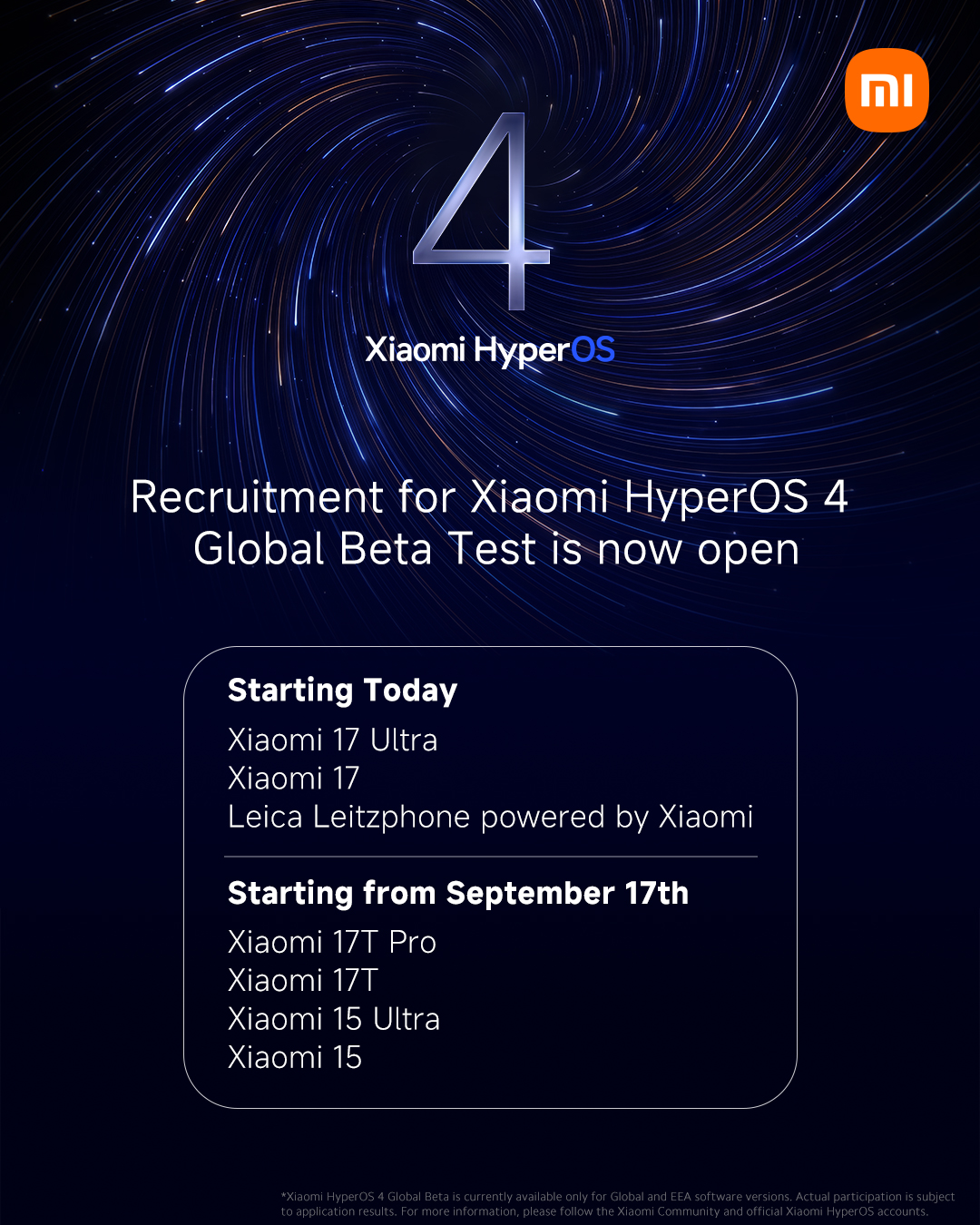
The first group available for recruitment includes:
- Xiaomi 17 Ultra
- Leica Leitzphone powered by Xiaomi
- Xiaomi 17
A second group will open for recruitment on September 17:
- Xiaomi 17T Pro
- Xiaomi 17T
- Xiaomi 15 Ultra
- Xiaomi 15
This means Xiaomi is not opening HyperOS 4 beta access for all Global models at once. The rollout is being handled in separate groups.
Xiaomi warns about beta stability
Xiaomi says HyperOS 4 Beta may be less stable than an official release and could cause compatibility problems with some third-party applications. The company recommends backing up important data before installing the software. Beta participants are also expected to understand basic firmware flashing and troubleshooting.
There is also an important downgrade limitation. HyperOS 4 Beta cannot be rolled back to HyperOS 3 through a normal OTA update. Xiaomi says users who want to downgrade must have the device flashed, with an authorized after-sales service center recommended for this process. Data may be erased during the procedure.
For this reason, Xiaomi recommends using a secondary phone for the beta if users depend on their main device for work or everyday tasks. Some applications may still need to be adapted for HyperOS 4 and could crash or lose certain functions.
HyperOS 4 brings a new system design
The Chinese HyperOS 4 material supplied with the announcement shows several changes planned for the new version. Xiaomi describes the new interface with a “Soft Light Glass” design, using translucent and layered visual elements. The lock screen is also being redesigned, while notifications can be grouped together.
The home screen is getting stacked widgets and more flexible folder placement. Xiaomi is also introducing a redesigned Fusion Device Center, which brings phones, tablets, watches, computers, and smart home products into one control area.
Some system apps will also gain AI-based features. The Recorder app is listed with smart summaries, markers, and automatic skipping of silent sections. AI Voice Notes can extract results and tasks, while the Super XiaoAi Input Method adds structured voice input and translation features.
However, these features come from Xiaomi’s Chinese HyperOS 4 material and are closely tied to the XiaoAi ecosystem. Their availability on Global ROMs has not been confirmed, so they should not be treated as guaranteed Global features.
Xiaomi also details performance changes
Xiaomi claims several performance improvements over HyperOS 3 in its laboratory testing. The company says the total number of commands needed for certain workloads has been reduced by 14.4%, while available RAM after eight hours of use is claimed to be 27.2% higher.
Its internal tests also report a 17.5% shorter time for opening 30 applications one after another after nine hours of use. Long-use frame drops are claimed to be 28.9% lower, while Xiaomi’s DOU battery test showed about 15.6 minutes of additional usage.
These numbers should be treated as Xiaomi’s laboratory results rather than guaranteed improvements for every phone. The company notes that results can vary depending on the device and test conditions.
Beta updates will arrive in stages
Approval for the beta program does not mean the update will appear immediately. Xiaomi says HyperOS 4 Beta packages are released when needed and may be pushed in stages. Users should also be running the latest available HyperOS 3 build before moving to the beta.
The account used for beta registration must match the Xiaomi Account signed into the phone. The device must also use a supported Global or EEA ROM. Users who are approved but cannot see the update should manually check through Settings → My Device → the version number section.
Xiaomi also warns that higher battery consumption and device temperature can occur shortly after installation. The system recompiles applications and performs background optimizations after the upgrade. According to Xiaomi, these effects normally settle within around 1–3 days.
The first Global HyperOS 4 Beta wave is therefore now open, but the program remains limited to selected models. More phones are scheduled to enter the recruitment process on September 17, while the timing of individual beta builds will depend on Xiaomi’s development and testing process.
Source: Xiaomi HyperOS official announcement



how many phones are allowed to use hyper os 4
I want to try HyperOS 4